December 6, 2012 – 10:56 am

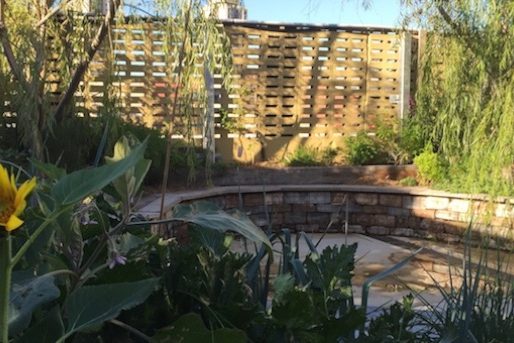
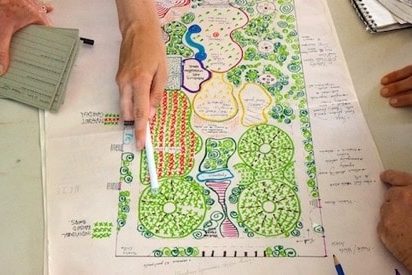
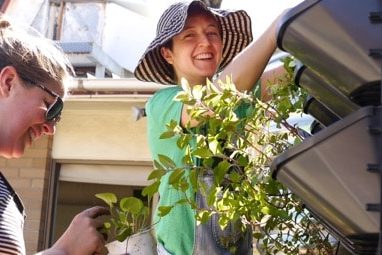
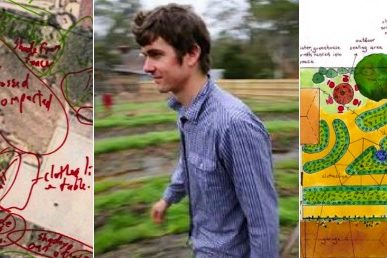
We’ve just finished up our Spring Permaculture Design Certificate here at Milkwood Farm, and I thought I’d share some of the (yet again) truly impressive design work that came out of it. Some great permaculture designs for both urban and rural systems.
One of the Spring PDC students described their new understanding of permaculture as: “like a basket of tools for humanity: an intersection of biology, geology, climatology, philosophy, social justice and humanitarian issues and history, packaged into a viable way of providing needs of everyday living.” Read More »
November 14, 2012 – 7:00 am

Urban forest gardens and food forests are definitely a part of our future cities – they have to be. We think every backyard should have a patch dedicated to perennial crops which interrelate as a stable and resilient system, while providing food, fruit and herbs for the household, hence our upcoming Urban Forest Garden workshop: 15 – 16 Dec: Sydney.
Micro forest gardens are a perfect way of achieving this goal. Essentially a food forest in miniature, a micro forest garden can be as small as one central fruit or nut tree with a complimentary guild of herbs and shrubs beneath it. You can stack a lot of nutrition into this kind of space if you design it right, and even slip some edible mushrooms in there too. Read More »
October 24, 2012 – 6:00 am

We’ve been fielding a lot of questions lately on what exactly a Milkwood Permaculture Design Certificate course (PDC) consists of. In short, it’s an exceptional and intensive foundation course in permaculture theory, from which students emerge with solid design skills.
The application of these design skills are broad – some people use their new knowledge to design their current (or future) farm, their suburban block, or their apartment courtyard. Some of our graduates have used what they learn overseas to design futures for their communities, some have used the design skills to re-design their businesses, and many go on to teach permaculture, in a range of community and classroom scenarios. Read More »
October 1, 2012 – 11:56 am

A quick shout-out that we’ve extended the earlybird price deadline for this darn fine course until Sunday night: Permaculture Design Certificate: 11-24 Nov 2012, Milkwood Farm
Milkwood PDC’s frequently produce motivated folks ready to take on and transform their communities. We place huge emphasis on ensuring excellent student outcomes and we see permaculture design skills as something that you’ll never stop learning, so we don’t pretend that this 2-week stint is all there is to it. But it sure is a hell of a start.
Our on-farm PDCs also prioritize people care and incredible farm-grown food to nourish body and soul throughout the 2 week intensive course. We have everyone from home-makers to bankers to teachers to international aid workers attend, and the consistent student feedback is that a Milkwood PDC enhances, affirms and motivates people’s existing knowledge and skillsets to go out there and be the change they want to see in this world.
>> More posts and photos of our previous Permaculture Design Certificate courses

It’s pretty amazing what a bunch of logs, a lot of gumption, some wheelbarrows and a couple of days digging can do. What was once a slippery slope becomes a lovely place to be – what a huge difference a home-made set of steps can make!
The core edible forest garden of Milkwood Farm is on sloping ground, and ends up against the chicken’s strawyard. And dividing the two, up until recently, has been a steep and slippery dirt track. But Trevor decided to change that, so he called our available on-farm crew together, and they set about transforming the space. Read More »

Following on from a whole street of verge gardens is another verge garden in Sydney that is using verge plantings as a great way of cultivating community.
Costa and his verge needs little introduction, since his garden gets featured weekly on national television as part of Gardening Australia. What I like best about this verge garden is how it is truly helping to create community in a rather underutilized street of spacious verges. Read More »

Just a quick note that we’ve scheduled some spring Aquaponics Workshops in Sydney, which are 2 days of intensive aquaponics how-to and why-to with Charlie Bacon (Ecolicious) + Nick Ritar (Milkwood).
While the basics of Aquaponics can be quite simple, there’s a lot of ways to do it in a way that enhances growing conditions for both fish and plants while still adhering to permaculture principles, which ensures you don’t end up with an input-heavy system disguised as a closed-loop one. Which is the kind of knowledge that this workshop is all about… Read More »

Designing the Warré honeybee apiary at Milkwood Farm has taken some protracted thought and planning. As well as designing for bee health, we’re also designing for educational access and best-practice Warré beekeeping, on a slightly tricky site.
The site selected for the apiary is a good one for our climate – an E-N/E facing nook, protected from western sun and southern winds. The main challenge has been the slope, and the fact that the surrounding earthworks that protect the site also limit its access. Read More »

Wilga Avenue in Sydney has moved their community out of their backyards and into their front yards. Squished between a busy road and a train line, it wouldn’t look very illustrious on a map, but once I got there I couldn’t wipe the smile off my face… a whole street of edible verge gardens! Yay!
And even better, it was a lived-in space. Outside one home, in the middle of a verdant verge garden, was a small wooden picnic table where a bunch of kids were busy having morning tea. Across the road, two guys were shoveling mulch from the back of a ute. This is city living done right… Read More »

Last weekend we ran an Urban Forest Garden workshop in Sydney… it was a great weekend of design, thinking and planting… Read More »