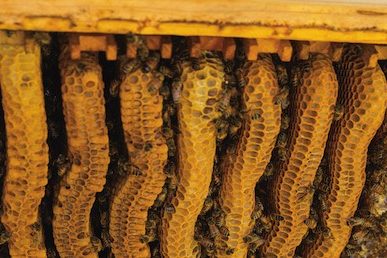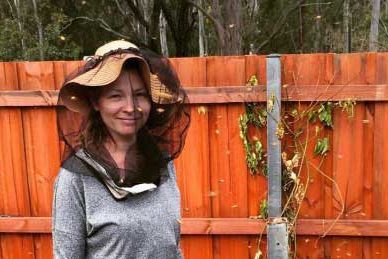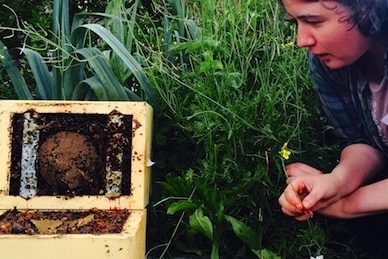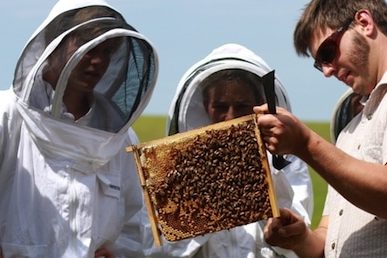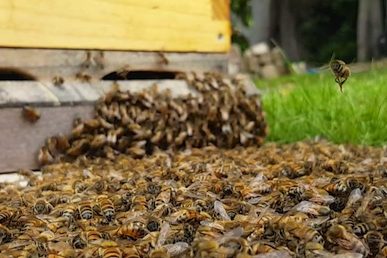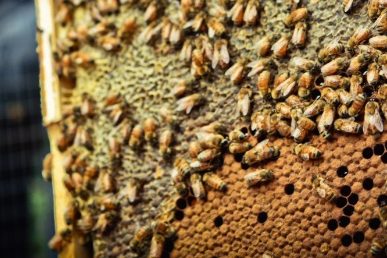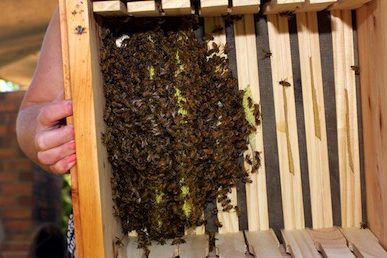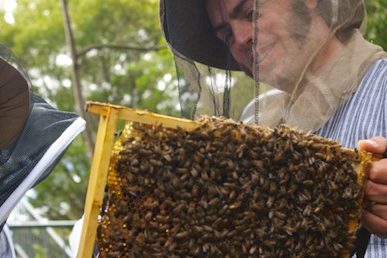
The other day Tim Malfroy, our mate and esteemed Warré beekeeper, came over to talk bees and check the Milkwood hives. We had hoped to split our two Warré hives into four colonies this season, but it looks like we’re sitting on that idea now.
Why? Erratic flowering patterns – the eucalypts around here are still sitting on their hands, so to speak. Not a flower in sight. So while our bees have been working our market garden and all the wildflowers and weeds around here hard, they’re still doing it tough. Read More »

Sun Hives are a hive design coming out of Germany and now gathering interest in Britain. They’re part of the world-wide movement towards ‘apicentric’ beekeeping – beekeeping that prioritizes honeybees firstly as pollinators, with honey production being a secondary goal.
The Sun Hive is modeled in part on the traditional European skep hive, and is aimed at creating a hive that maximises colony health. The main thing I love about this hive and the enthusiasm surrounding it is not the hive itself, but the philosophy behind it, that of apicentric beekeeping. Read More »
February 26, 2013 – 6:03 am

This Summer has been downright weird, weather-wise. Which has meant all sorts of things, for all sorts of things. Including for the bees of Milkwood Farm, and the bees of eastern Australia in general.
For the central west of NSW (Where Milkwood Farm is) it’s been a crazy dry Spring/Summer with short downpours, following on from three very wet summers. This means in turn that all the flowering patterns of many trees around us have gone somewhat skewiff, and the bees have had to adapt accordingly. Read More »
February 14, 2013 – 5:57 am


The Bee People was written by Margaret Warner Morley in 1905 as a book for children about honeybees; their biology, their social habits, their work as pollinators, and their honey. I picked it up as a curiosity but you know what? It’s a pretty solid bee book for kids. Read More »
January 31, 2013 – 7:00 am

Bees deserve more study than they get, seems to me. No matter if you’re a budding beekeeper or just a responsible citizen, these ladies and their ongoing work are responsible for one in every three bites of food we eat. They deserve both our joyful respect and a deeper understanding.
The two books above are top of Tim Malfroy’s list of essential bee texts, and this summer we’re reading them, and gleaning much goodness. Read More »
January 11, 2013 – 6:32 am

This new pdf resource is free to download and a great document for anyone wanting to ensure their garden, verge, community patch or farm is as pollinator friendly as it can possibly be.
It’s a guide put out by Rural Industries Research and Development, and is a fantastic resource covering ideas for bee-friendly plantings in both urban and rural areas. It’s chock-full of planting guides, nectary calendars for different Australian climates, and pollinator garden design… Read More »
November 28, 2012 – 7:00 am

In the spirit of using small and slow solutions (with large effects on gross colony happiness), Tim Malfroy has recently modified his design for quilt boxes on his Warré hives, and I’m liking his latest update.
The quilt box on a Warré hive is a simple aspect that makes a big difference to the hive’s health, in that it insulates the colony below from the radiant heat of the sun, and also contains the heat of the colony on a cold day. Tim’s latest modification makes for optimal hive health in a range of ways… Read More »
October 30, 2012 – 6:00 am

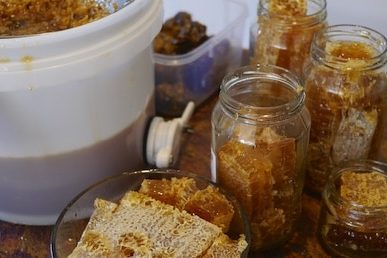
Checking the Warré hives this week, Tim pulled off a box of empty Warré comb. The bees stored honey in this comb over winter, but now it’s spring they’ve eaten through these stores, leaving bare comb, sculpted according to the colony’s needs…
(psst – our spring Natural Beekeeping course is on at Milkwood Farm this weekend)
October 20, 2012 – 6:00 am

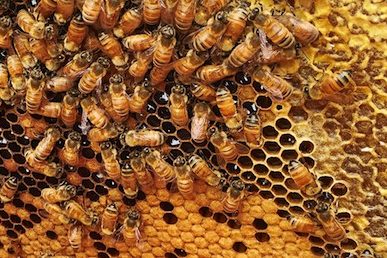
Honeybees build comb. It’s part of what they do. It’s part of who they are. And being, as it is, actually exuded from glands on the undersides of their bodies, the honeycomb that bees build is literally part of them. Comb is literally part of the super organism that is a honeybee colony.
It’s a bit strange, therefore, that for the last 150 years in western beekeeping some have come to see the comb as separate to the bees – something you can replace with pre-made wax, or with plastic, even, without noticeable ill-effects for the colony. But within a wholistic approach to beekeeping, natural, bee-made comb is central. Here’s why. Read More »
September 20, 2012 – 6:00 am

Spring is swarming season! At this time of year, honeybee colonies that have either outgrown their available hive space or have deemed their hive unsuitable for whatever reason start taking off in search of a new home. For natural beekeepers, it’s a great time to catch yourself a new colony.
Our friend Steve was ready this Spring. After attending a Natural Beekeeping course with Tim Malfroy he’d build himself a beautiful Warré hive in his shed, and was ready for the spring swarm action. And lo and behold, look what happened… Read More »