
(A note that the above clip is in the garden at Quoll Hollow, where we live now on melukerdee country, and the references to Milkwood Farm below are from our years up north on Wiradjuri country)
Azolla is a native water plant with some seriously exciting attributes for anyone looking to develop closed-loop cycles for organic animal feed. It’s high in protein and minerals, fixes nitrogen, is palatable to chickens, pigs, goats, ducks and cows, and can be grown on any closed body of fresh water.
At Milkwood Farm we have many emerging animal production systems, and we’re looking for cost and energy effective ways to produce organic feed for them, using passive and regenerative techniques. Azolla looks like a great tool for us.
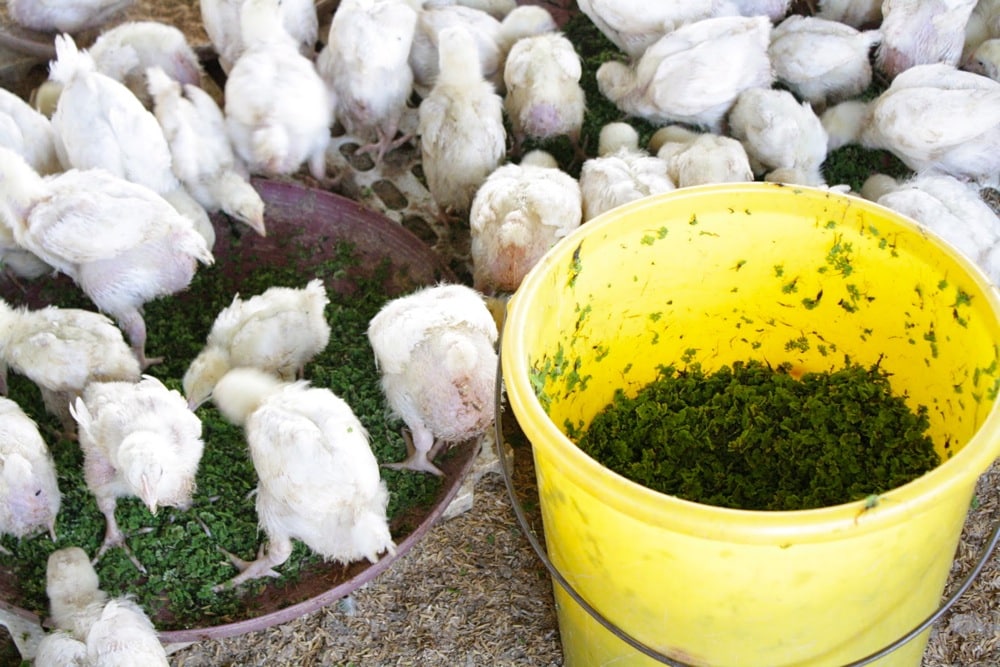
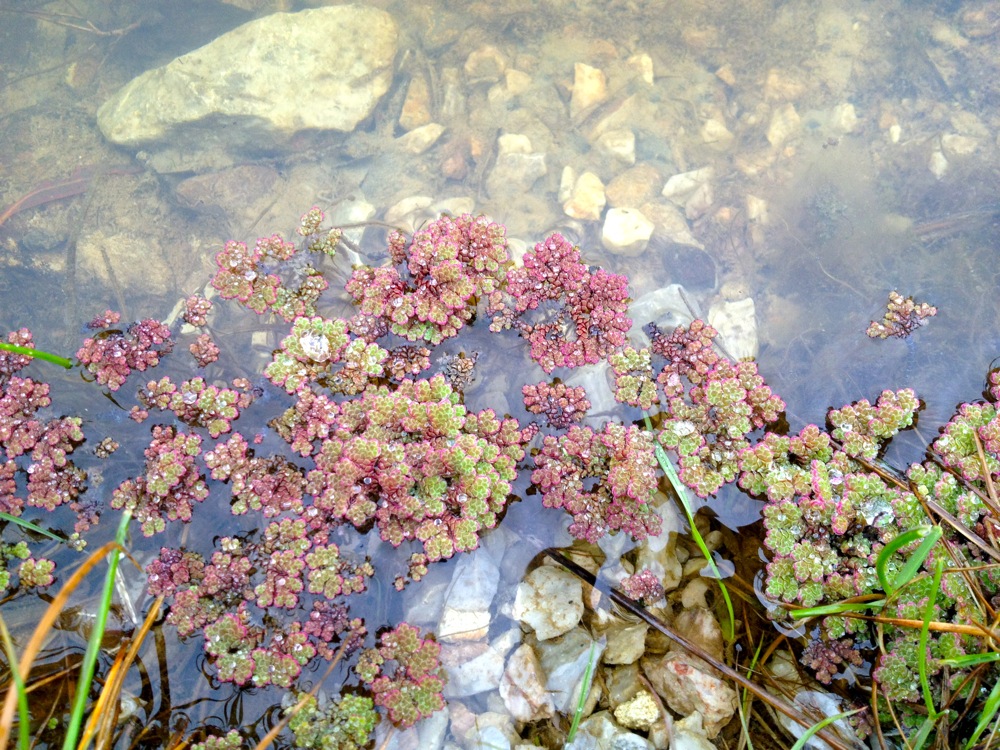
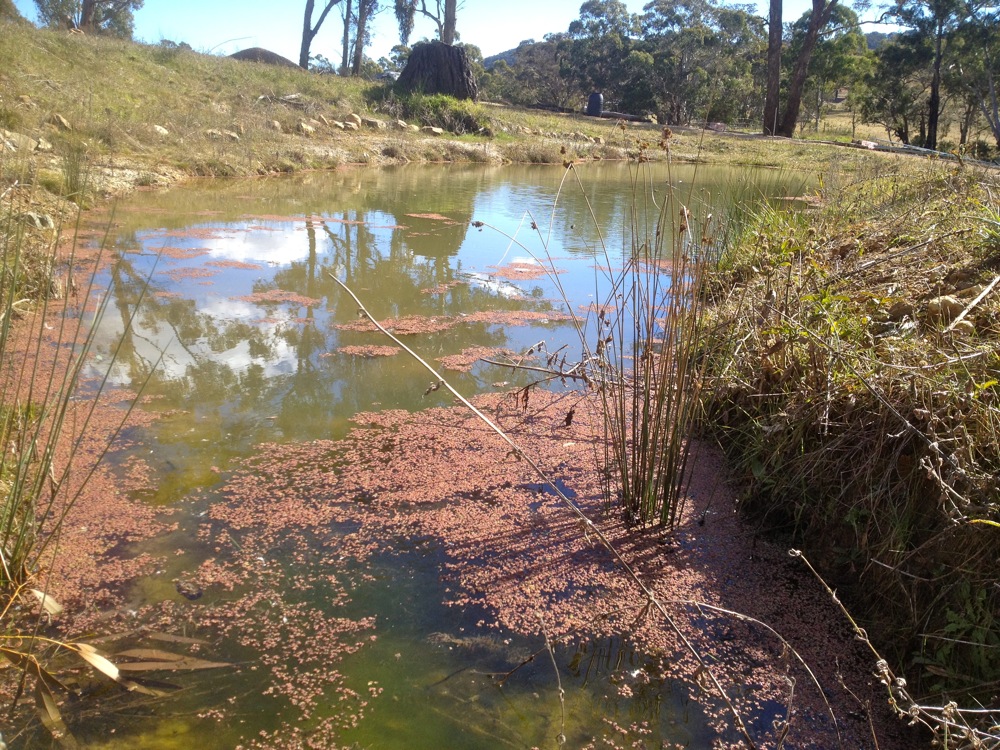
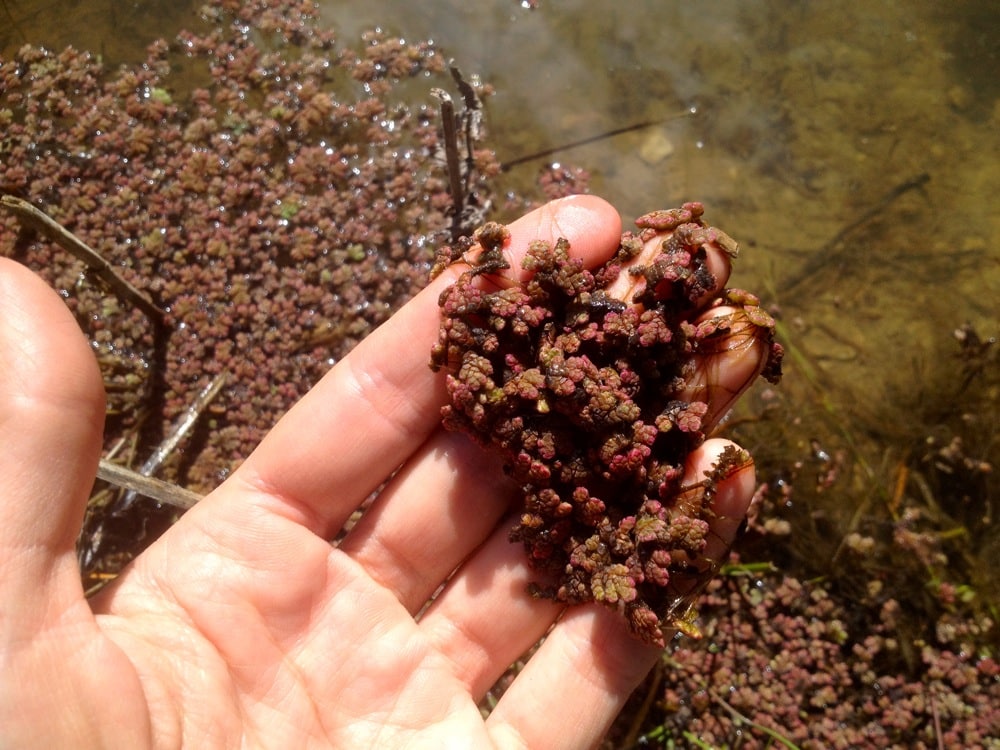
Azolla is an excellent aquatic green manure plant, and was until recently used extensively in Vietnam, China and other parts of Asia in rice paddies, where it would cover the surface of the water in the paddy and out-compete weeds while the rice grew, fixing nitrogen and contributing fertility as it went.
Being placed as we are in terms of climate and rainfall, we’ve no plans to do rice paddies in the near future. What we do have however is a desire to develop high-protein sources of food for chickens and pigs and hopefully some ducks and milking cows sometime soon.
Down in the valley below us is prime lucerne-growing country – Mudgee is a very good place to buy cheap lucerne hay, and we periodically get in truckloads of mulch-quality lucerne which is a bit mouldy, but fabulous for mulching plantings, vegetable beds, adding to compost piles and generally establishing fertility.
However we’re not close enough to the valley country to fetch large quantities from down the road without incurring steep cartage costs, and we’ve not got good enough soil on Milkwood Farm to grow it ourselves in quantity. So we’ve been looking for other high protein and nitrogen sources that are multipurpose, and that can conceivably be grown successfully on-site.
The great thing about Azolla is that not only is it a high value feed for animals and a great option for adding to compost and to the market garden plantings, but that it grows itself without taking too much fertility from the system.
It’s a little bit like free energy, and highly regenerative as a system component.
The growing of Azolla is very easy: put some in a dam or pond, and watch it grow. It fixes nitrogen from the air and minerals from the water. It does deplete the nutrient content of the dam, so if you were trying to grow other things in the dam that you wanted to flourish (lotus, water chestnuts etc) I’m assuming you’d want them somewhere else, unless that dam has a seriously high nutrient load.
Within a permaculture system, if you have a series of dams and swales you would probably want to grow Azolla in the lower parts of that system, to make the most of nutrient concentration that is going to be greater at the bottom of such a system.
We’re trying Azolla out in the small pond beneath the house dam, which it happily colonized entirely over a couple of months, until the hard frosts of winter arrived, at which point it died off and shrank back to the sides. This was actually before we realized how awesome Azolla was, otherwise we’d have harvested it before the cold snap.
In Spring we’ll add Azolla to the bottom dam and see how it goes in our climate, but we’re hopeful it will do well and that we can start harvesting regularly to start supplementing feed aroudn the farm,a nd hopefully adding some of it to ongoing compost production as well
Azolla benefits:
– Hosts a symbiotic blue green algae Anabaena azolle, which is responsible for the fixation and assimilation of atmospheric nitrogen.
– Can double in size every several days under optimal nutrient and water temperate conditions
– Green manure plant for paddy agriculture for weed supression and fertility (used extensively in organic duck and rice systems)
– Nitrogen and mineral source for compost making
– 25-30% Protein, and low in lignin with makes it digestible to many animals, as well as nutritious
– Rich in essential amino acids, vitamins (vitamin A, vitamin B12 and Beta- Carotene), growth promoter intermediaries and minerals like calcium, phosphorous, potassium, ferrous, copper, magnesium etc.
– On a dry weight basis, it contains 25 – 35 percent protein, 10 – 15 percent minerals and 7 – 10 percent of amino acids, bio-active substances and bio-polymers.
– Palatable to: ducks, chickens, pigs, cows, goats, sheep and rabbits (and probably lots of others too)
– Can increase milk production in cows by 15-20%
– Azolla is a nutrient feeder and prevents Algal blooms in farm dams as a result, keeping water more usable for stock
– Can be easily harvested with a scoop net, or grown in enclosed, floating rings which can be pulled to the edge for easy harvest
– After initial collection/purchase, you get a lifetime supply!
Downsides of Azolla:
– Being as it is a water plant, Azolla can clog up water lines and pumps coming from farm dams if that dam is fully colonized with Azolla.
– Dead Azolla in a body of water can reduce the waters’ oxygen content for a time
– Given its growth rate, do check if Azolla is considered invasive where you are (like in parts of NSW). If so, don’t encourage it, sieve out what’s there and feed your animals on that (or compost it), and then find anpother way to enhance your chickens diet – sprouted feedstock grain? Works great!
As you might guess from this glowing report card, there are much interest and active development in Azolla as a low-cost, organic and nutrient rich animal feed around the globe from various institutions, in addition to the cultures that have been using it for centuries.
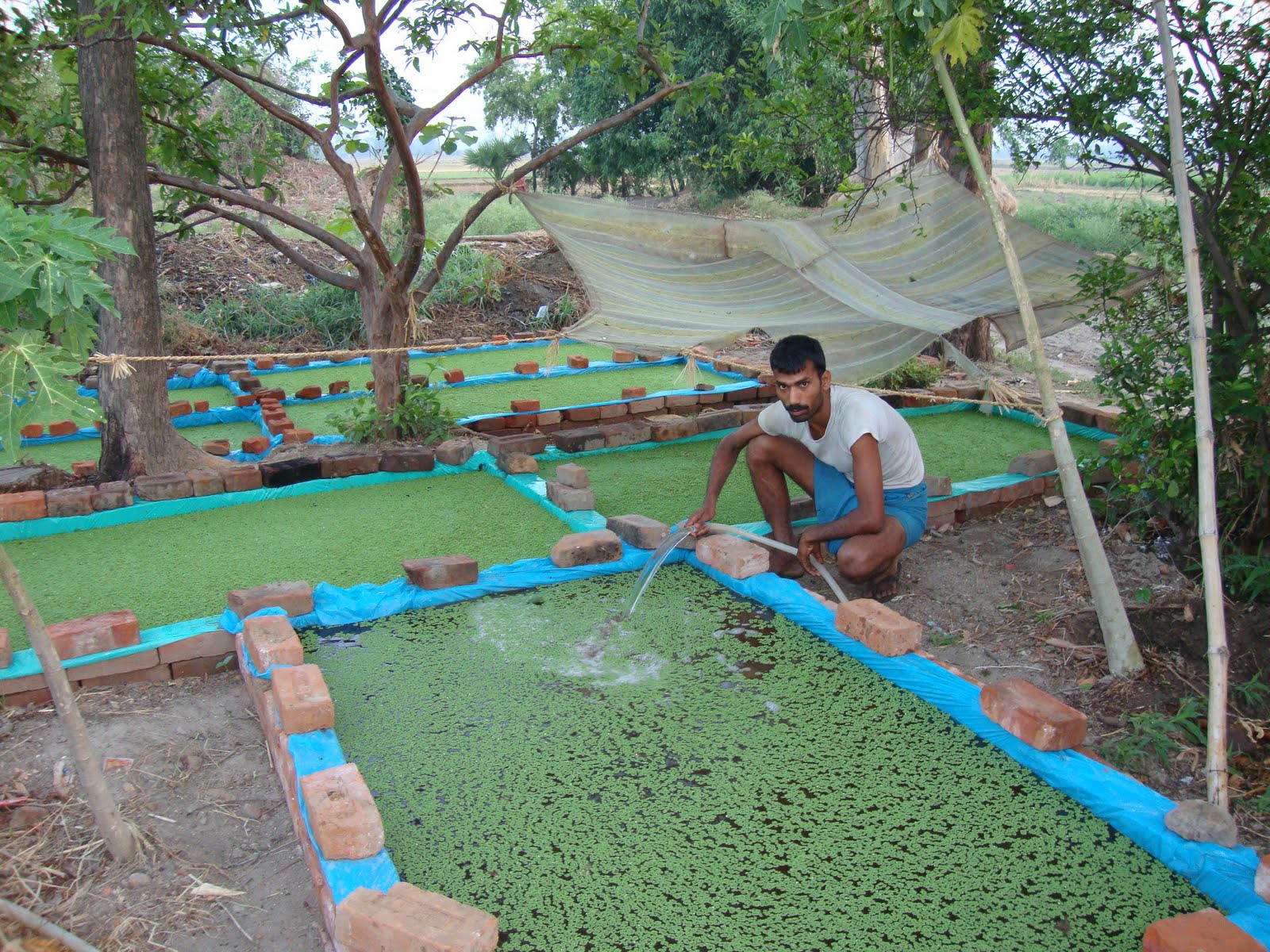
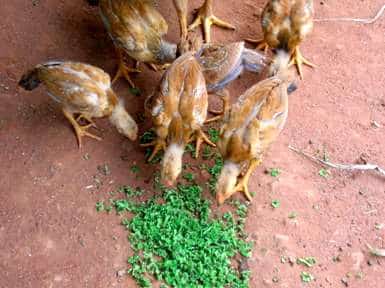
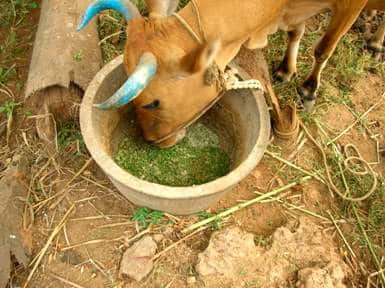
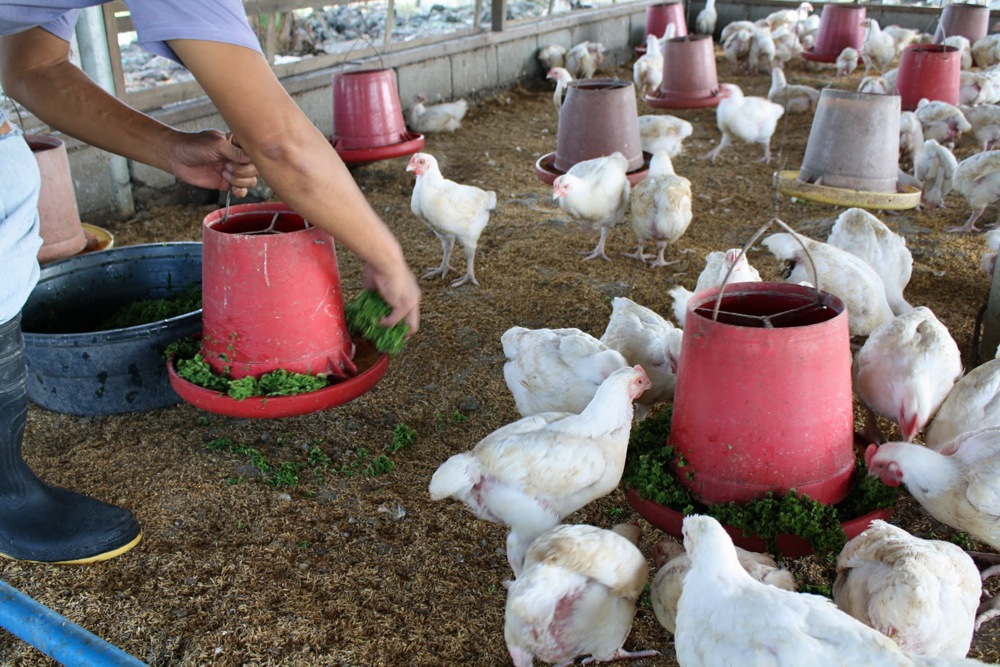
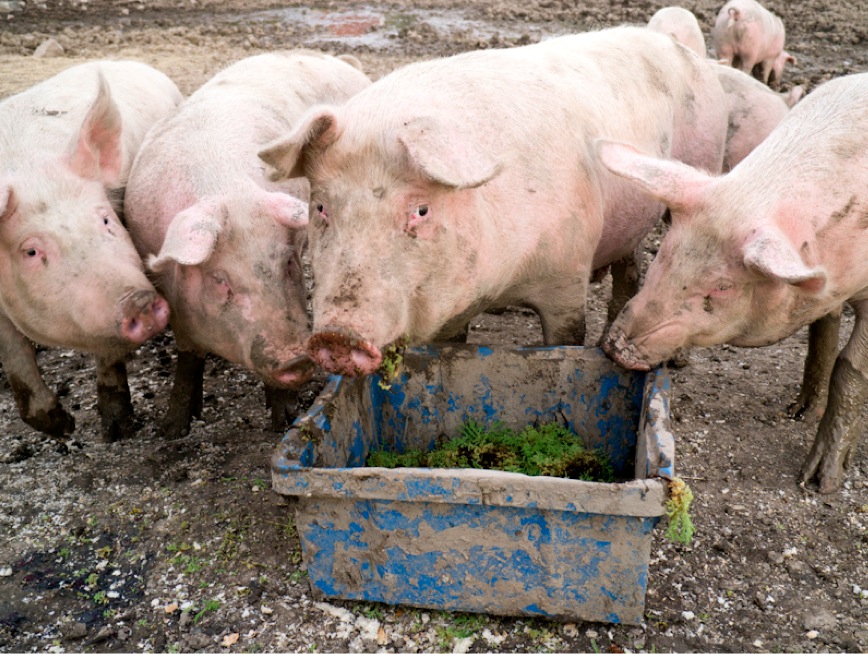
At Milkwood Farm, we’re pretty excited to have come across it as an organic, regenerative and very low-energy input ‘super food’ for both animals and soil. I’ll keep you posted on how we go with its production in the spring.
Yay for another tool to add to the permaculture toolkit of low-energy small farm abundance.
>> More posts on Appropriate Technology
Azolla References:
- The Azolla Foundation
- Azolla: An alternative feed for sustainable livestock production (pdf)
- Using Azolla as fertilizer for lowland rice (scroll down)
- Azolla: What Is It, and Is it Bad for Your Dam?
- Azolla Growth in Farm Dams (DPI)
- The Azolla Cooking and Cultivation Project
- Azolla at Sunshine Chicken
- dhartiputrakisansewa.blogspot.com