

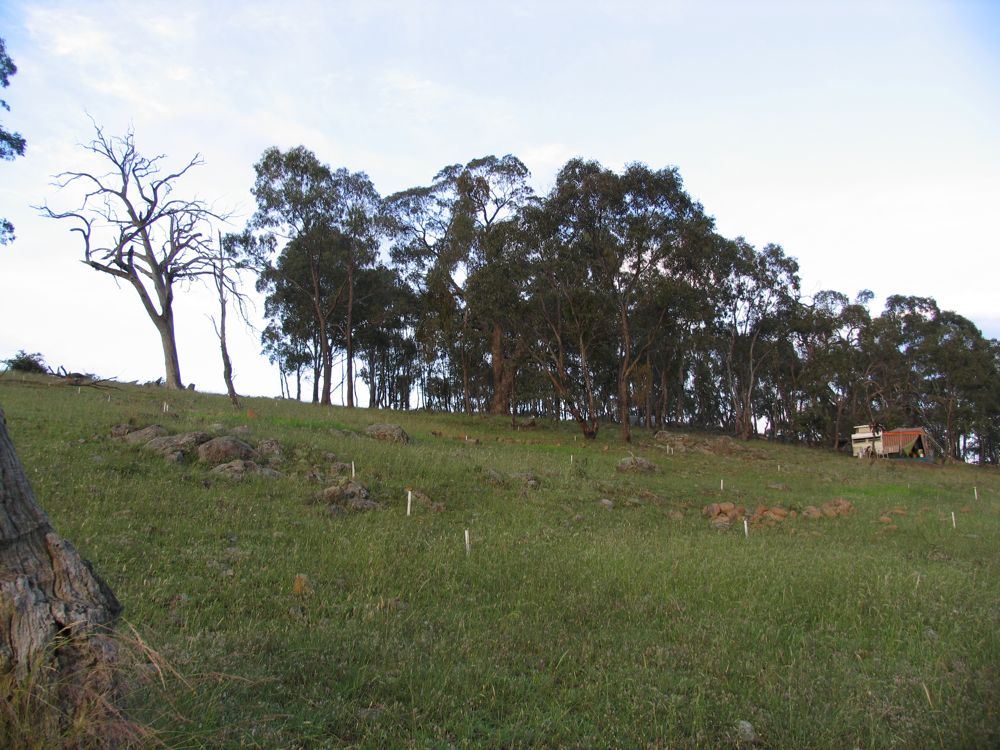
Here is our Forest Garden in December 2007, four years ago. You might notice there’s nothing there. There wasn’t anything anywhere, at Milkwood Farm. Just out little caravan, and us, dreaming of turning this rocky hillside into a kick-ass permaculture farm.
We knew we wanted to create a rocking Forest Garden as part of Milkwood Farm’s design. And it’s taken four years but, thanks to good friends, good design, gravity fed water, and a certain amount of gumption, we’re now well on our way…
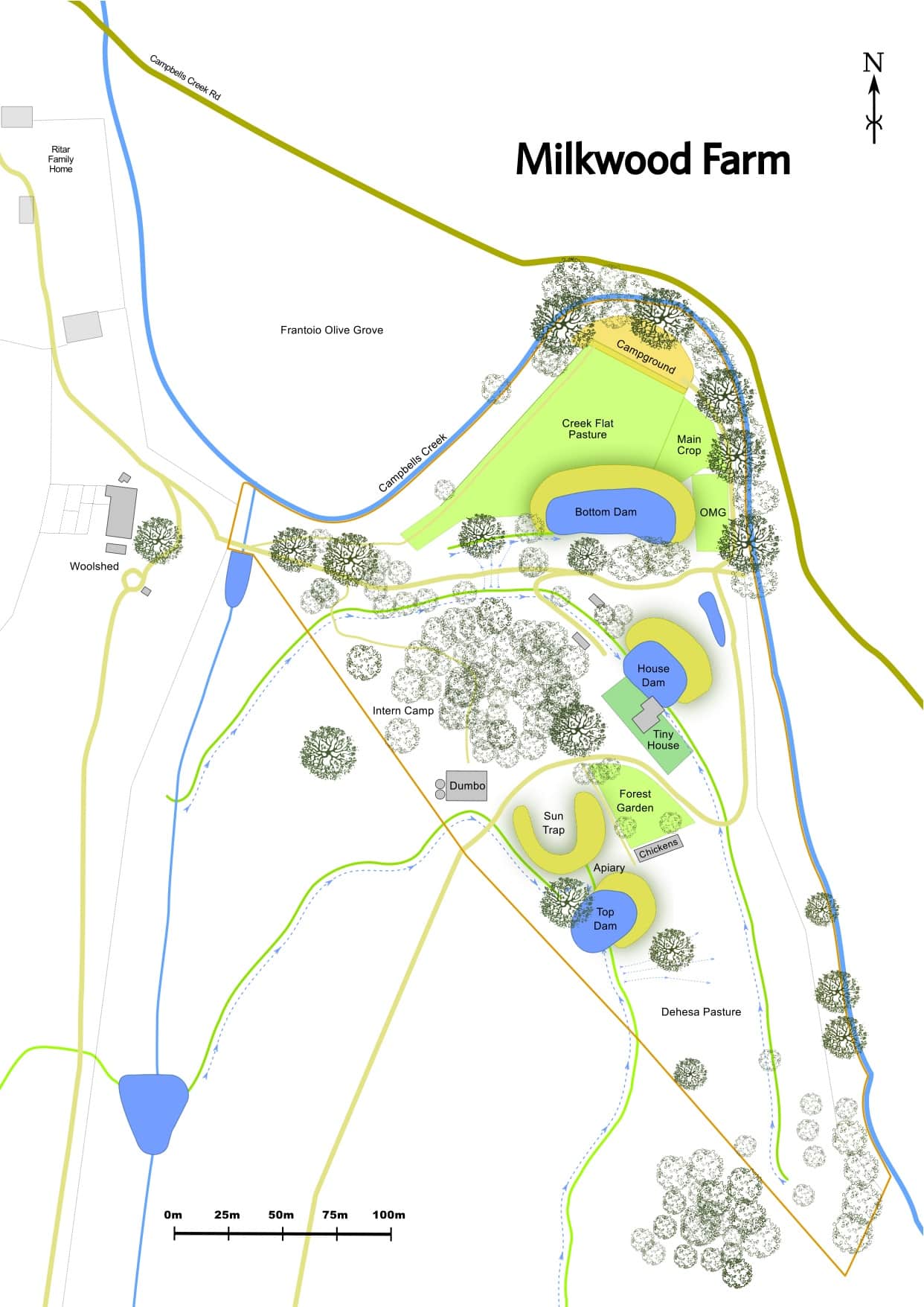
Click to enlarge
But there was one or two other things we needed to do first (or concurrently, ideally). Build a house was up the top of the list. Create a livelihood was another. Grow food was another. Then along came a baby. You know how it is.
So at the start of 2011, four years after first landing at Milkwood, the Forest garden was still largely a concept, with the beginnings of plantings of acacias and a couple of random fruit trees salvaged from a nursery closing-down sale.
We’d started the fertility cycle by tractoring our geodesic chicken dome (how to here) across the forest garden zone, then mulching where the tractor had been. So things were starting to happen, but there was no real plan – not yet.

Forest garden from above, Sept 2008
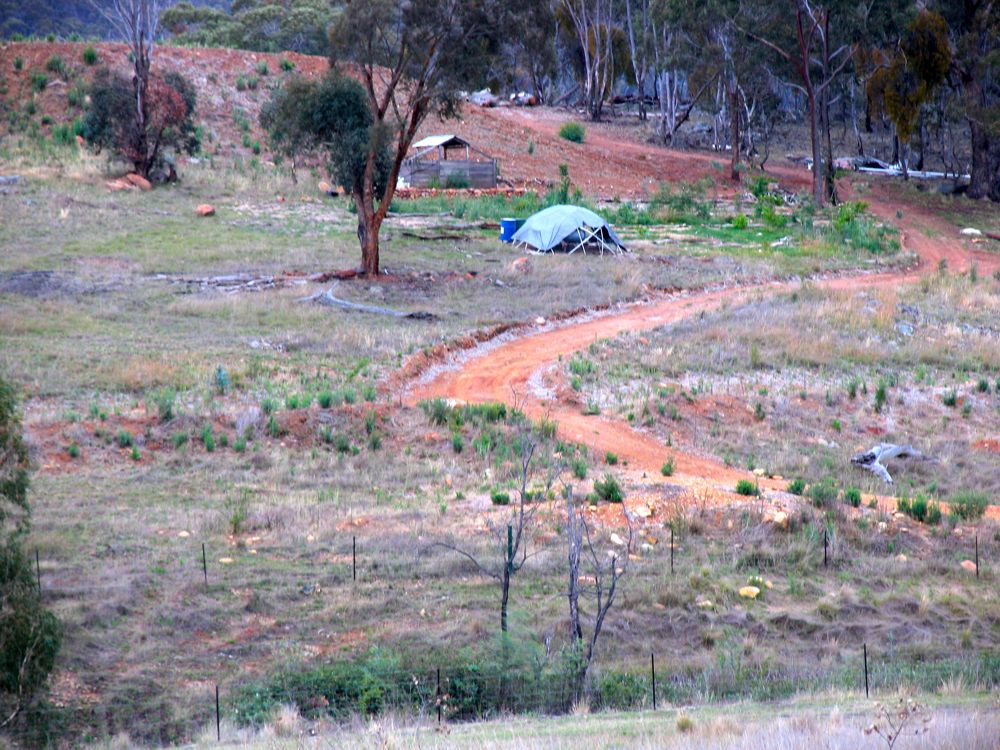
Forest Garden Dec 2009. Left to fend for itself, with a random carpet of self-seeded pumpkins left over from the chicken tractor
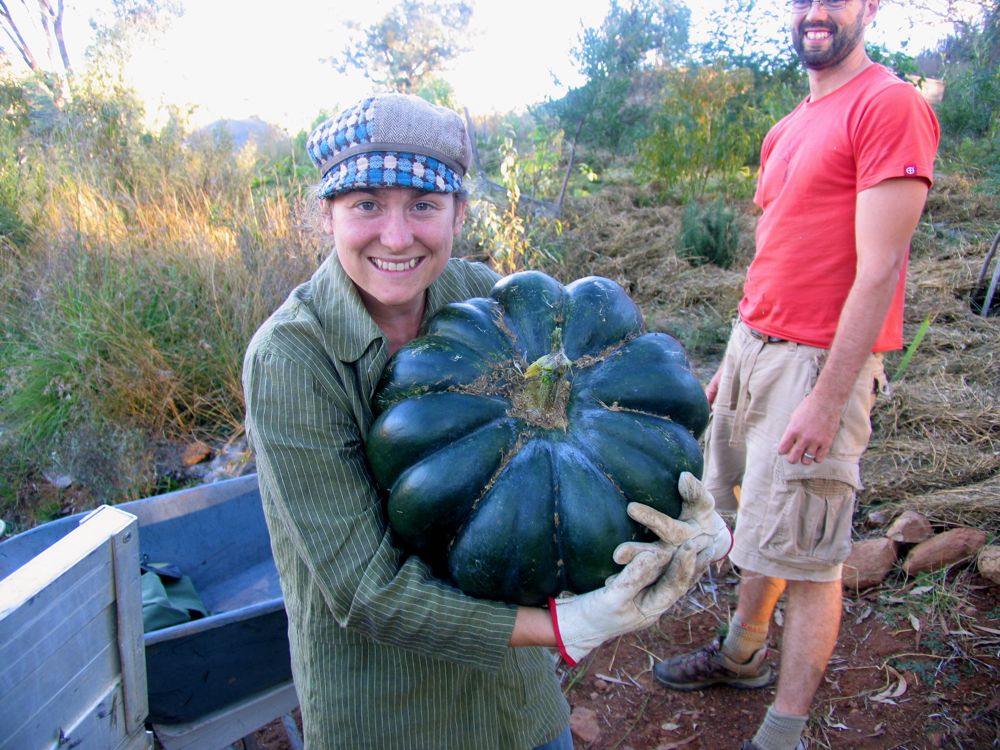
Surprise harvest! Michelle Avis with a whopper from the self-seeded pumpkin vines, April 2010
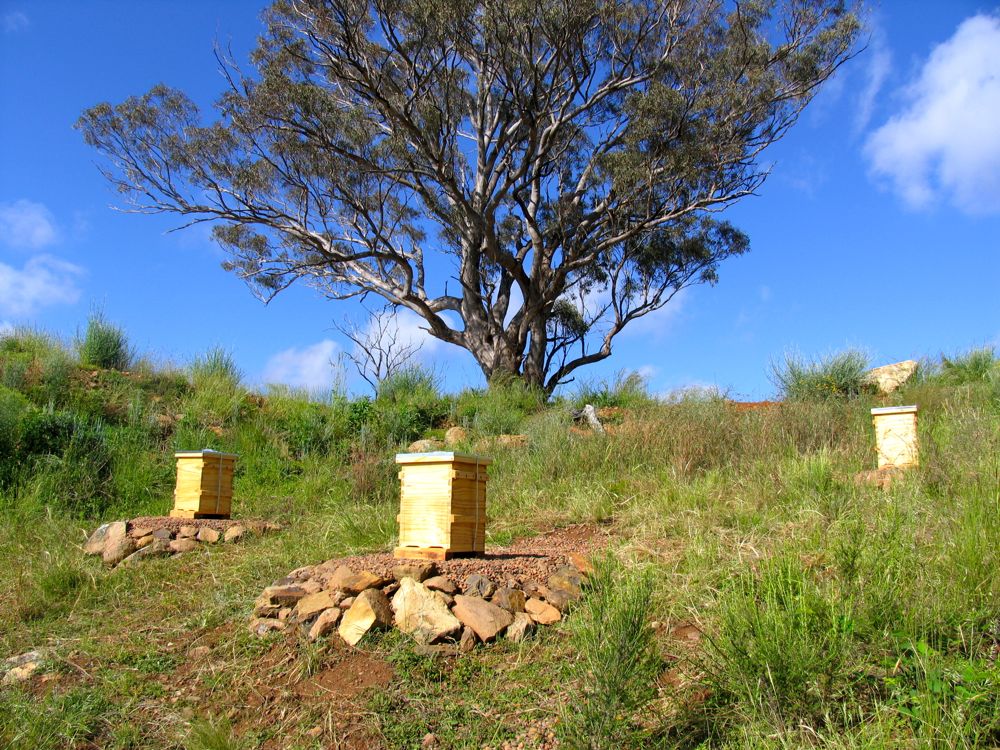
Warré apiary goes in, above the Forest Garden. November 2010
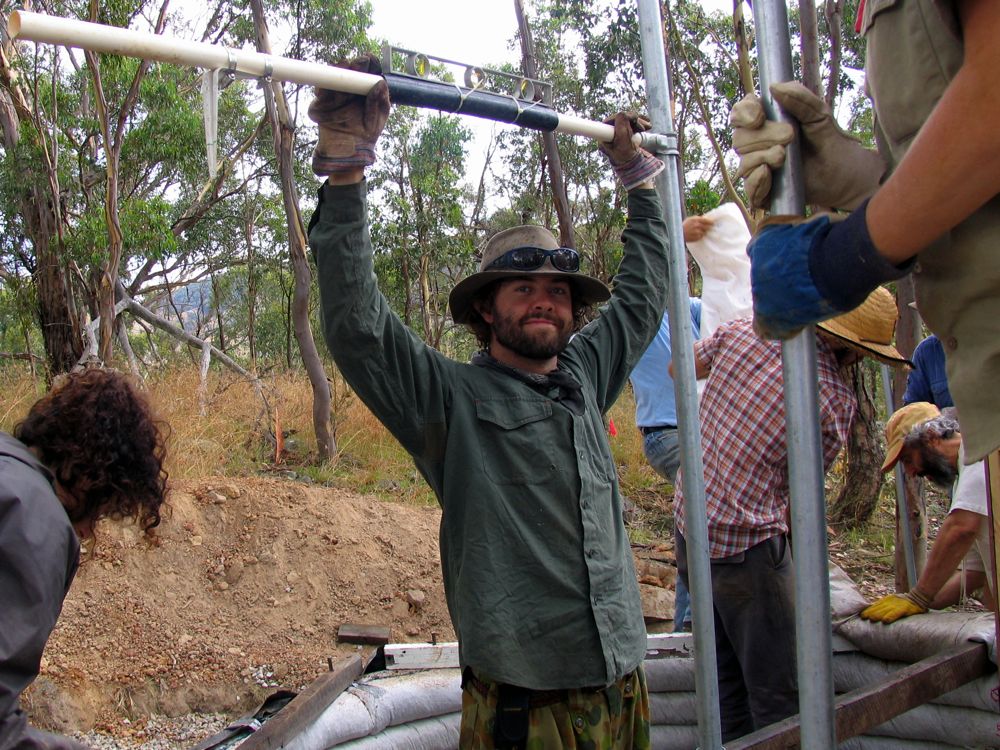
Harris during our Earthbag building course, in a rare moment of earthbagging. Feb 2011
Happily, in February of 2011, Harris showed up to play ukelele at our Earthbag building workshop. Except Harris never got to do much earthbagging – he instead took himself off and spent most of the week muttering over our forest garden and its devised-from-scrap irrigation system.
It turns out that Harris had a background in horticulture and permaculture design, specializing in temperate forest garden systems. Long story short, we asked him to take the Milkwood forest garden on as a project. A kind of ‘if it can work here, it can work anywhere’ type project. He said yes. Hooray!
>> Path design in the Forest Garden
Fast forward to Spring 2011. We now have the beginnings of an extensive permaculture design for the forest garden, and this coming year we’ll be figuring out the tendrils that this forest garden nucleus will spread throughout Milkwood as a farm….
Intensive forest garden, woodland forest garden, dehesa-style sections and maybe even a special microclimate project in the suntrap (formerly the old top dam).
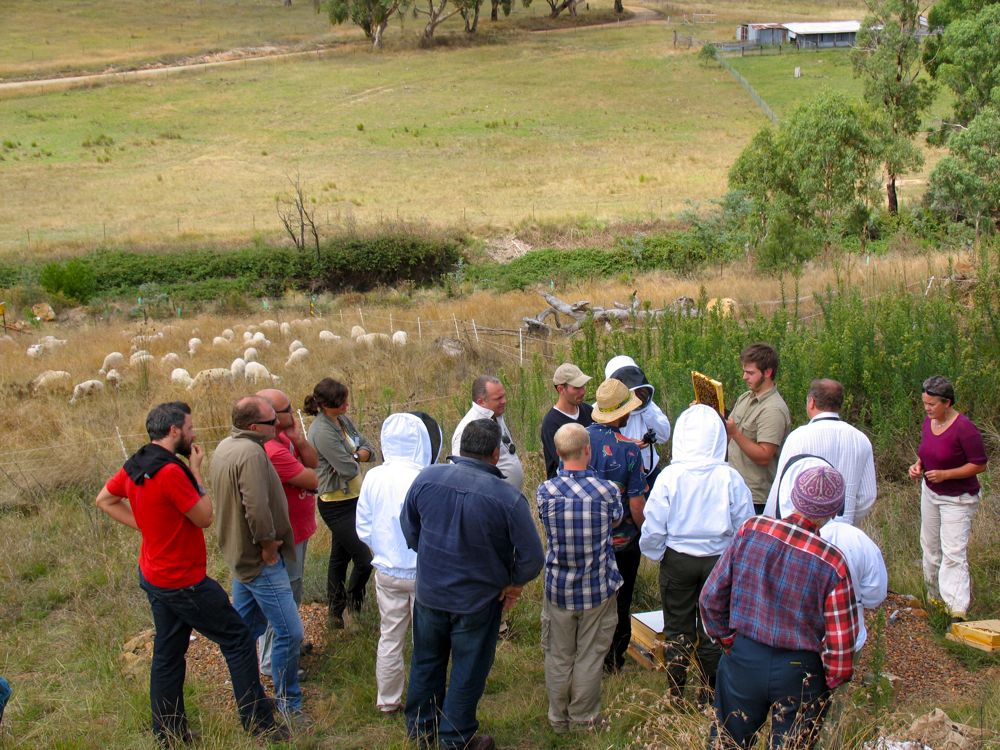
Beekeeping course in the apiary, just before we swapped cell-grazed sheep for a chicken run. March 2011
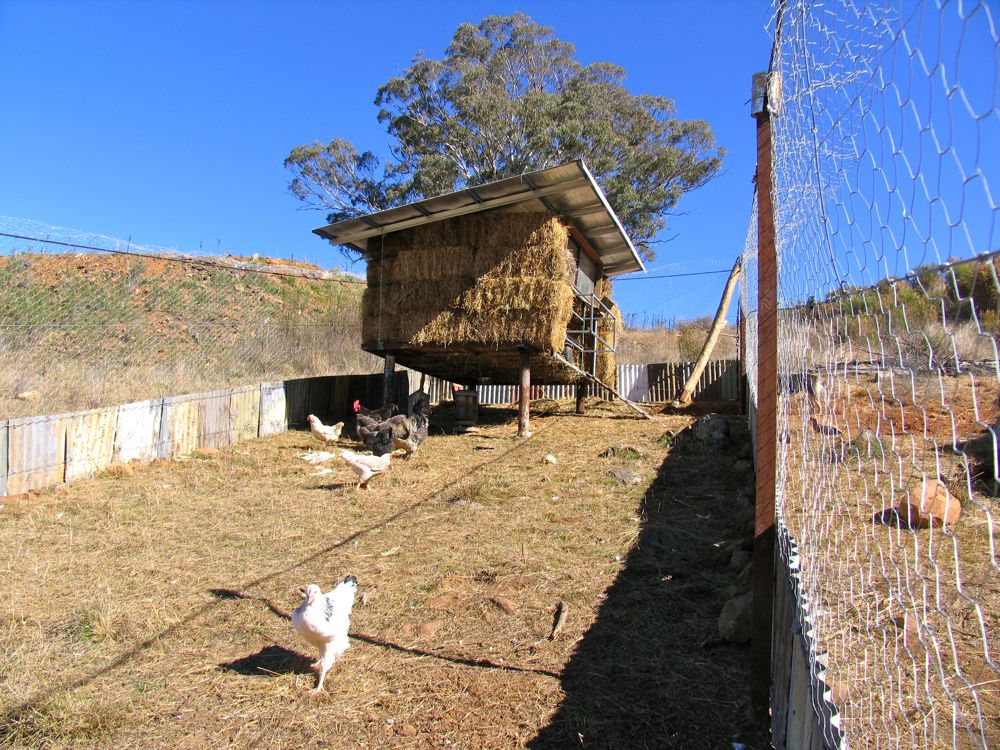
Gravity Chicken Run installed at the southern extremity of the Forest Garden. April 2011
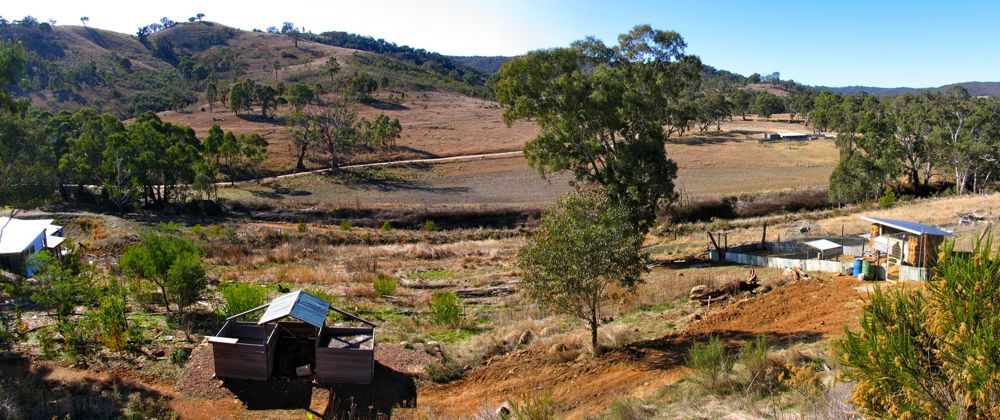
Forest Garden from above - July 2011
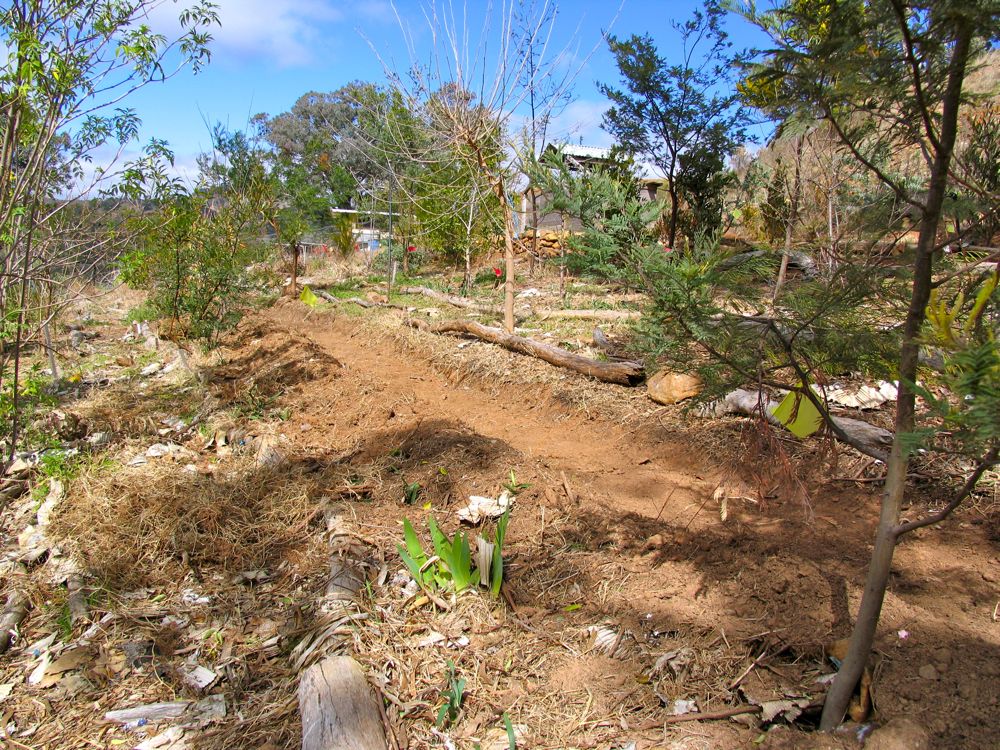
Contour swale paths going in - August 2011
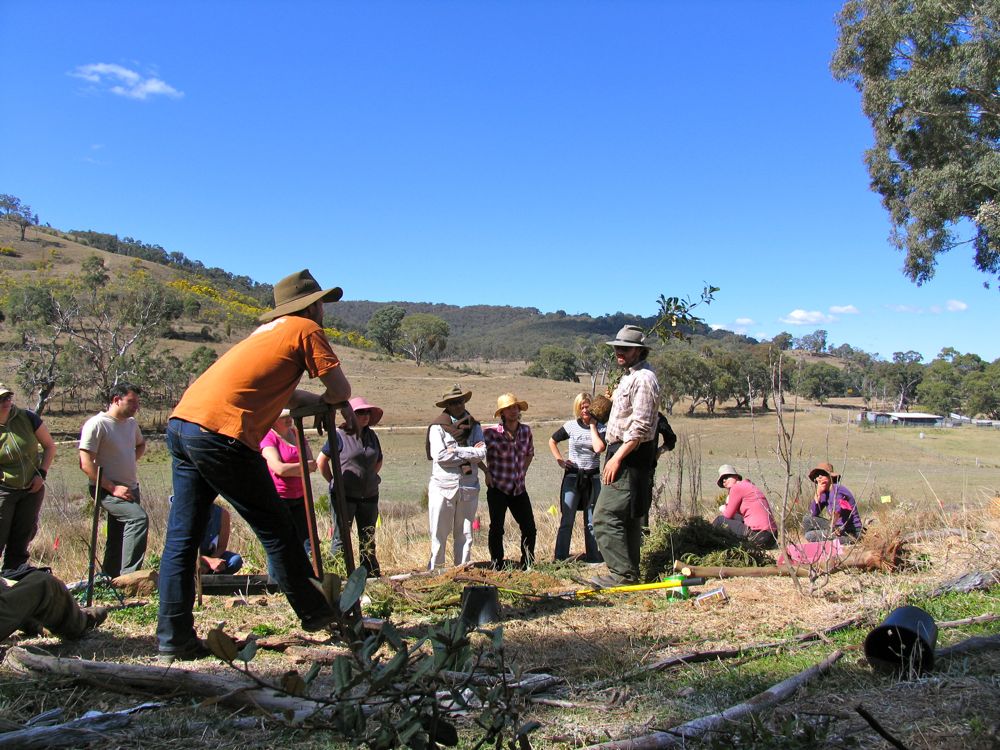
First Forest Garden course, covering temperate Forest Garden establishement - Sept 2011
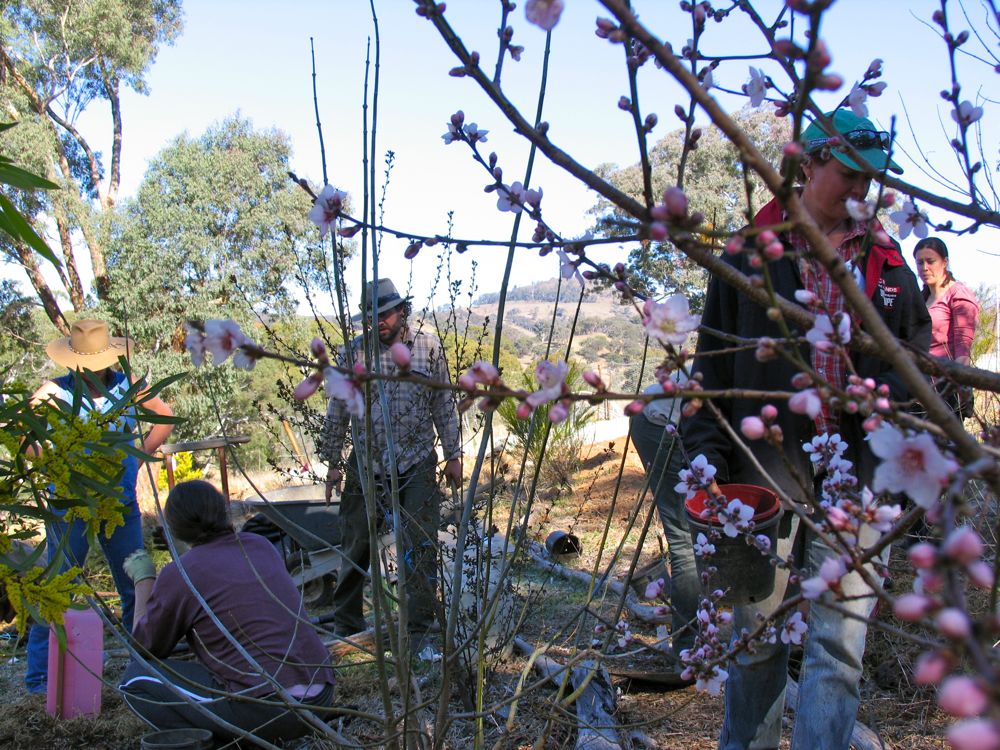
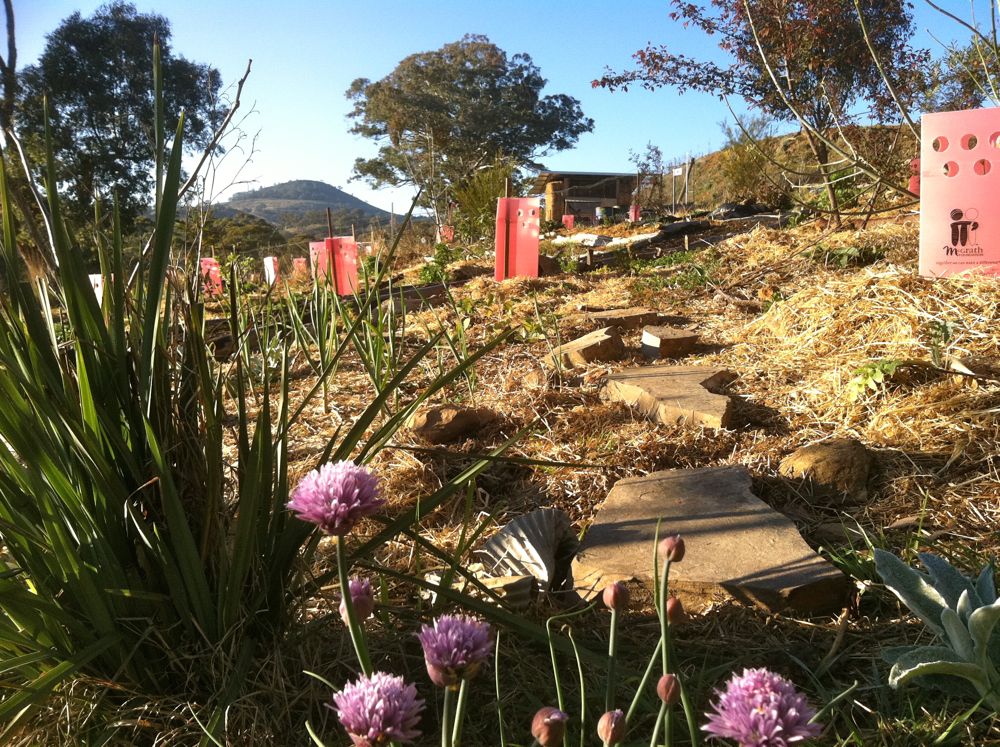
Stepping stones and spring is slowly starting - September 2011
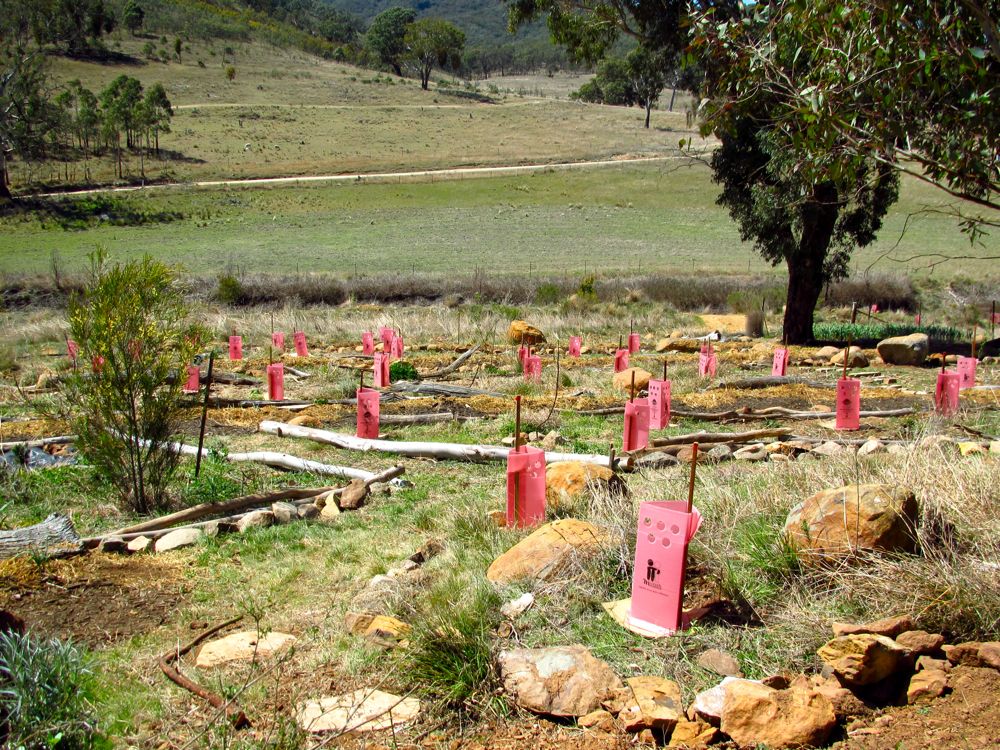
Establishing the new forest edge, towards the chicken run - September 2011
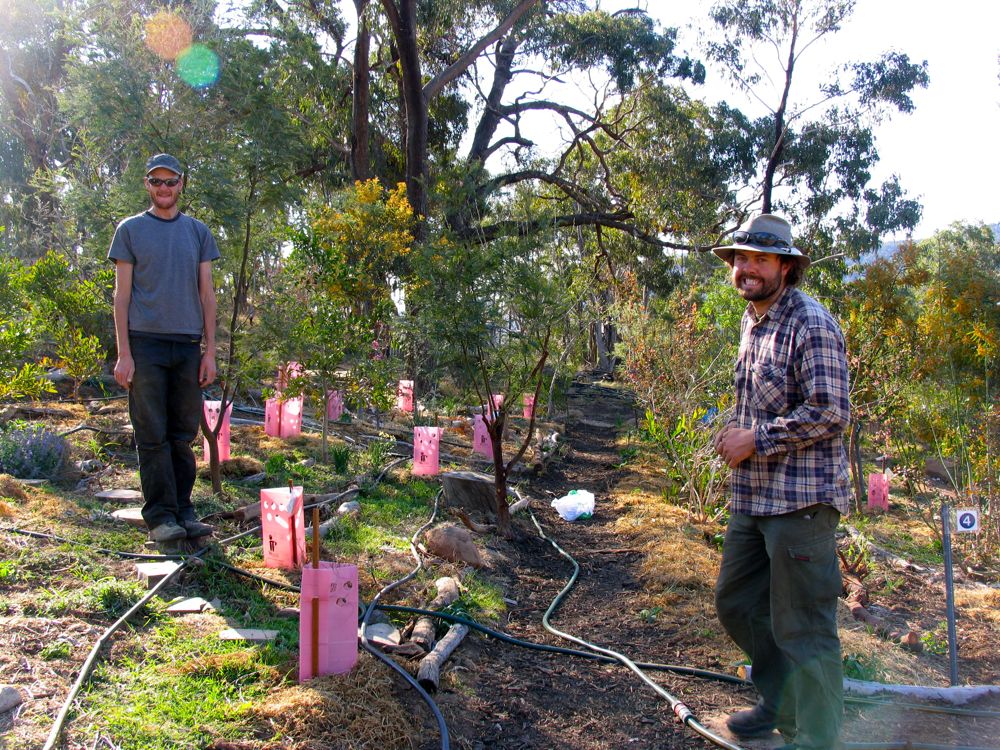
Intern Adam and Harris installing drip irrigation - September 2011
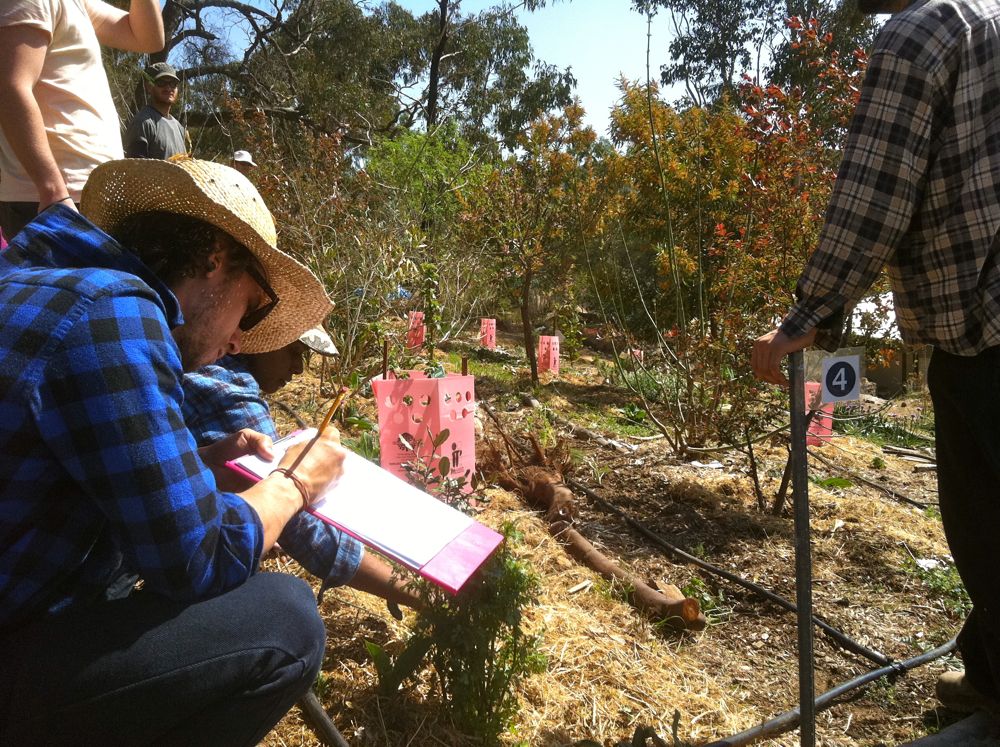
Cataloging the plantings and their interrelationships - September 2011
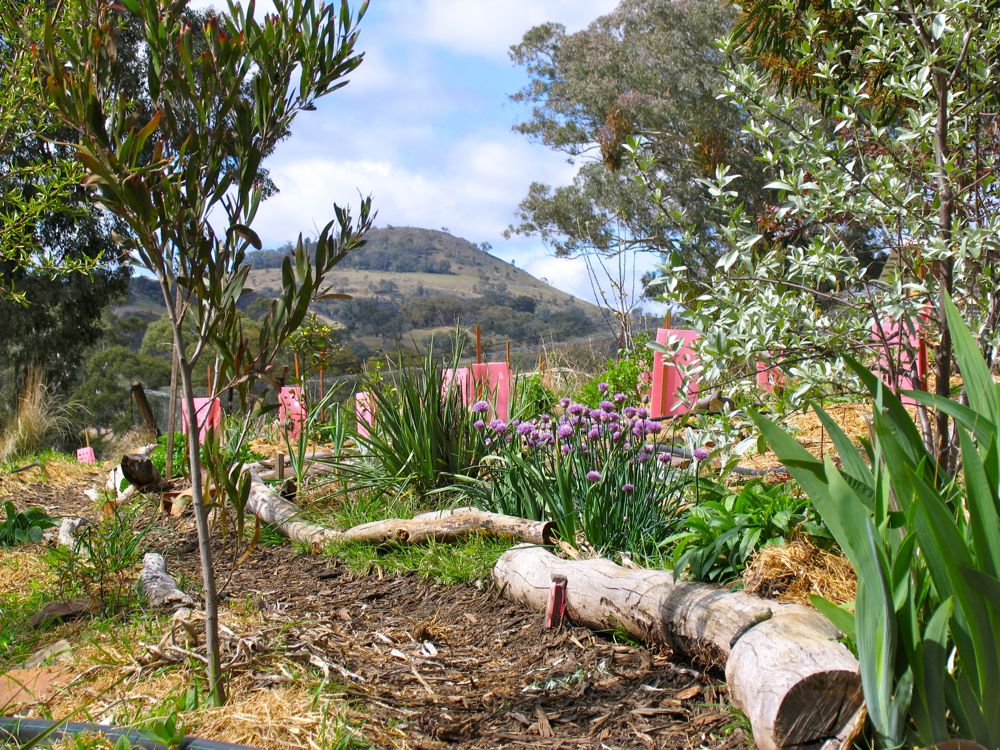
Swale paths filled with woodchips and working nicely - October 2011
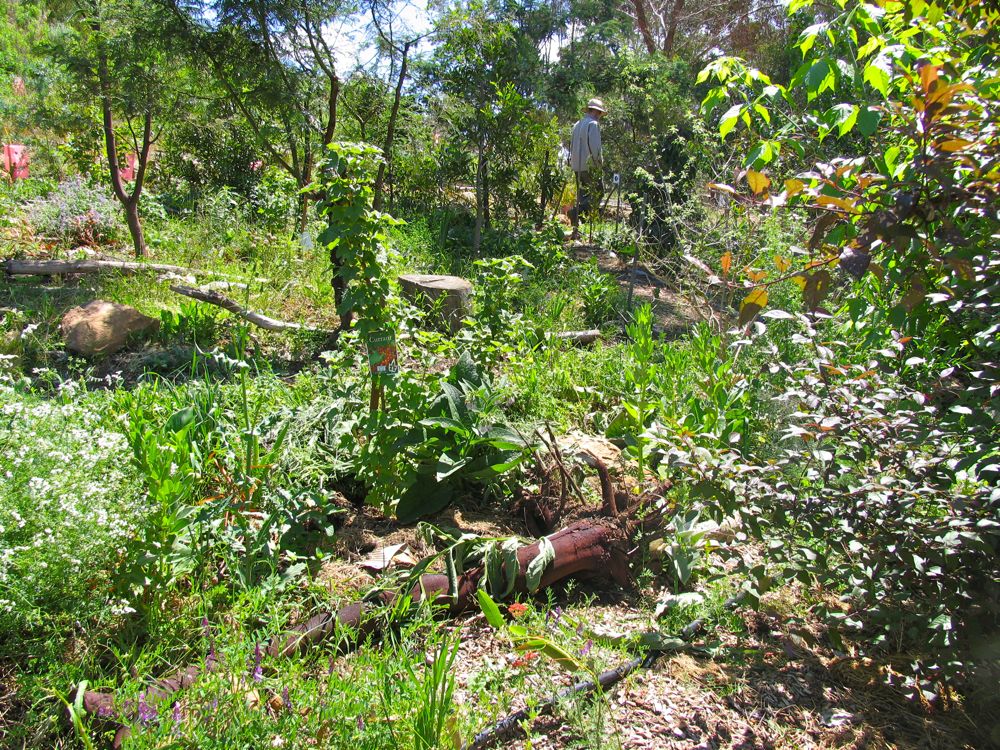
Currants going crazy - November 2011
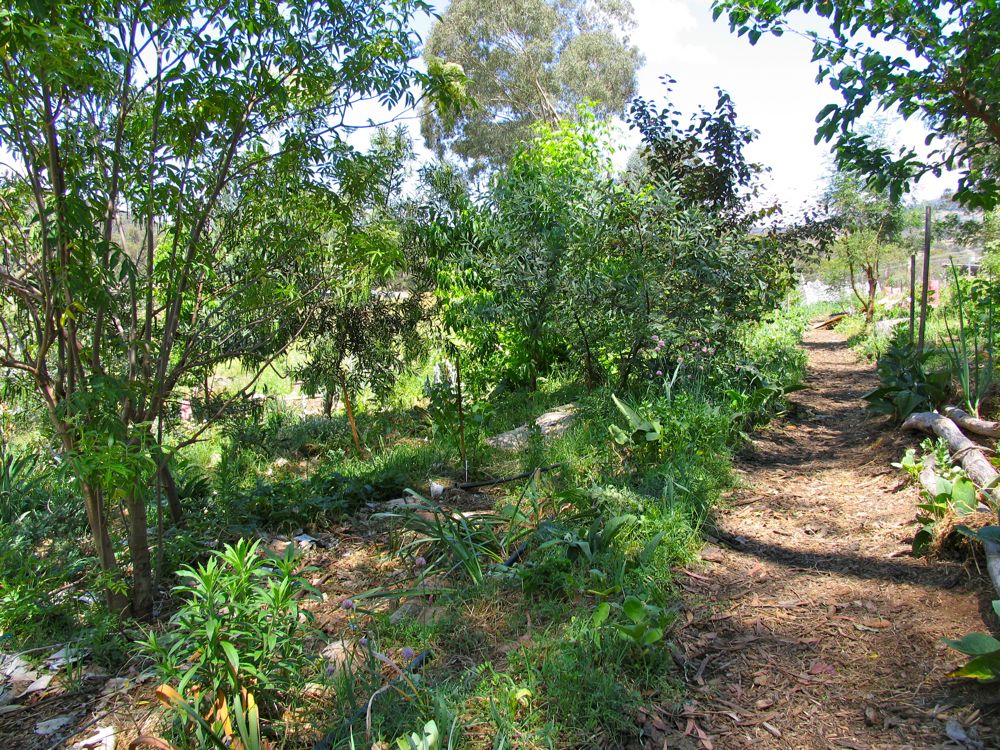
Real shade! The beginnings of lushness! At last! - November 2011
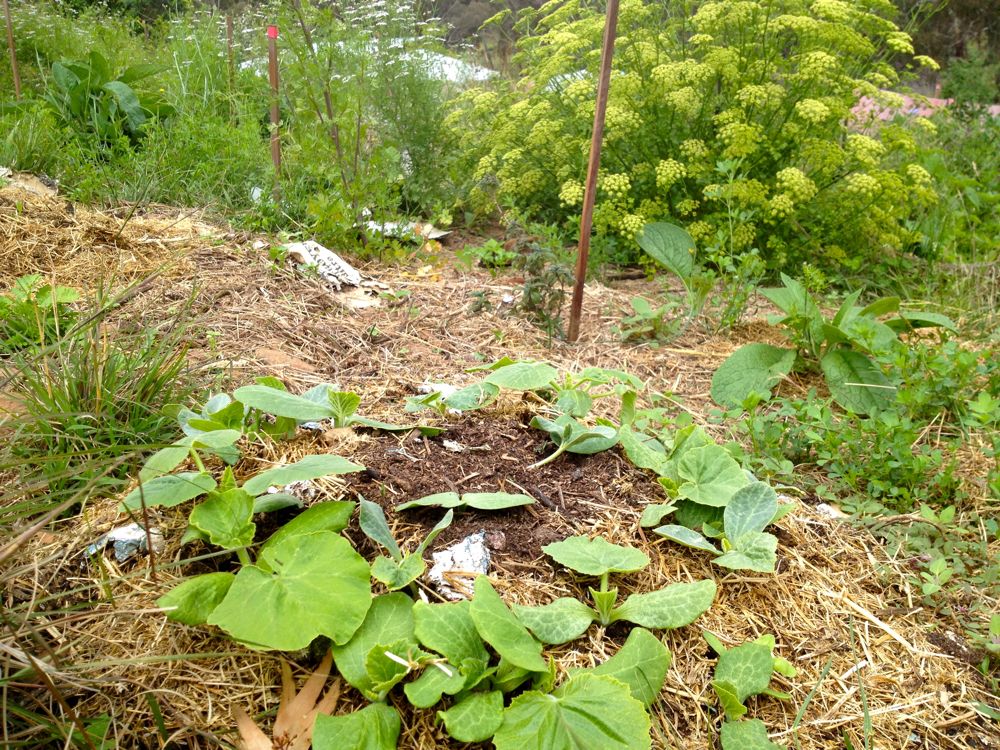
On the forest edge, pumkin plantings to surpress the summer grass and make the most of the available water + nutrients
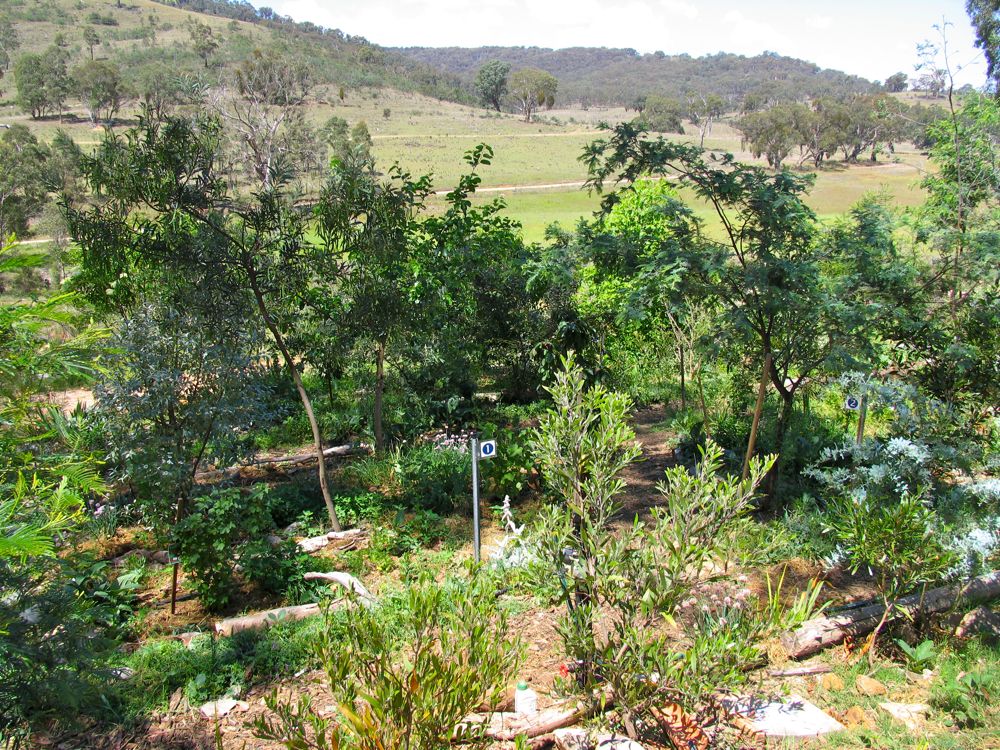
One forest garden, slowly emerging from the rocky hillside - December 2011
We’re really excited about where this forest garden will go, and after just one spring of intensive work (working within modest means of budget, plant stock and water availability) I am proud to say we already have a small amount of really truly shady space, with flowers and herbs beneath…
Can’t wait to see what the future holds for this aspect of Milkwood.
>> Forest Garden books and resources
>> Other Forest Garden resources on Milkwood.net
Massive thanks to Dan Harris Pascal for all his work so far, and his continuing commitment to the project. Also thanks to all the interns and woofers who’ve helped since this forest’s inception.
If you’d like to be a part of the journey, we’re running more Forest Garden workshops both at Milkwood Farm and an urban version for Sydney as well.



WOW! this is so inspiring! I’m actually off to do a three day food forest workshop towards the end of january at brogo permaculture garden – I hope our work turns out half as fabulishous!
Looks great. That’s all I can say.
What a deeply satisfying project! To see a barren hillside coming to life is so encouraging.
Thank you for posting your progress. Inspiring. We recently bought 21 acres in Mississippi and plan to do a permatcultlure inspired garden. Watching your garden progress gives me such hope for my little piece of land!
Whew! Looks great! I’m proud to have been a part of it, no matter how small.
Fantastic, well done and keep it going Milkwood.
awesome! it’s looking so great!
ah, that’s what I needed to see the change.
How did you guys
a) Stop wallabies from grazing all your trees to the ground
b) Stop grasses and weeds from moving in and strangling your trees.
These two problems resulted in a near total failure of my swale/forest garden project…
Hey Greg,
a) the wallabies seem to have better things to do round here (lots of feed?) and the place is densely stacked
b) grass maintenance is a factor of each patch, but with dense planting and a watchful eye it’s much better in the first couple of guilds we’ve planted, and hopefully over time that will lessen. the trick seems to be to do one small patch first, nail it, then move on (with planting and weed control)
Gotta start small unless you have an army of weeders, i think…
Hi Kirsten,
Start small certainly makes sense except for two things:
1) The world food/water/oil/environment situation means we’re in a hurry.
2) Geoff L’s Food Forest DVD makes it look like he installs giant swales in one go.
I did a write-up of our trials here: http://permaculture.org.au/2012/01/20/swale-fail/
Would love to hear your comments.
Hey Greg, Since we’ve started in on this road we have had HEAPS of convos about the ‘we’re running out of time, we need it NOW’ clause of permaculture design implementation. I get it. I also think that convo is designed to push the same buttons as ‘you need this [insert consumer item] NOW’… and it is often used as an excuse to treat people poorly and trample on ethics in the name of ‘immediate solutions’. Which quite frankly, i think is bs. The thing is, starting small doesnt mean going slowly. It means getting things right as much as… Read more »
Reblogged this on X_trous Notes and commented:
I want to do internship here too..!! But I guess I can never reach Aus. Hmm..