
Tinyhouse build: our not quite non-toxic house

All the way through this epic project to build a very small house, we have had a couple of rules about materials: lowest possible footprint, recycled where possible, and the trickiest: non toxic. Like so non toxic, you could feed it to your toddler. And they wouldn’t expire as a result.

To keep our house non-toxic we’ve bent over backwards and done tonnes and tonnes of research into every conceivable element: insulation, wood products, glues, fixtures, cladding, pipes, water storage, roof gutters. You name it, we’ve sussed it. But now it’s getting to crunch time, our resolve is slipping…
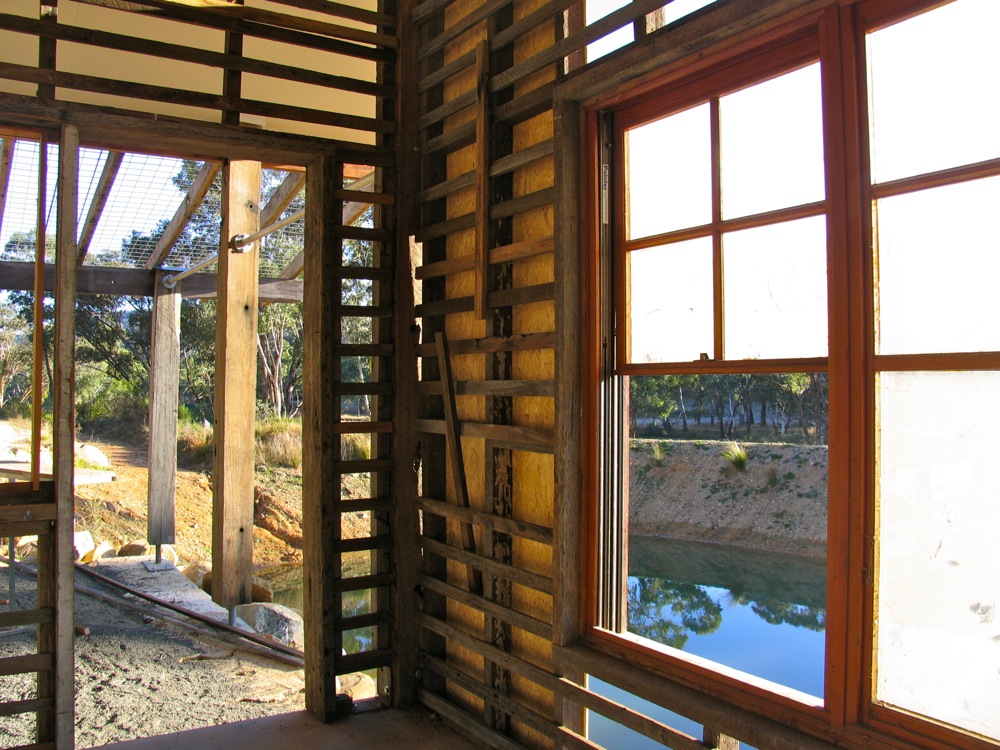
We have tried really, really hard. There is not a single element to this build  that we have sourced by just ‘going to see what was available’ at the local hardware or whatever. For most elements, research was the key to finding the product that fitted into our ethics.

Can I just point out here that I am not going to bang on about the toxicity of ‘normal building materials’. That’s not my street.

What I do want to point out is that both I and Nick were damned if we were going to let Ashar grow up in a house that we’d built for him that was off-gassing all sorts of nasties for various periods of time, as well as introducing various poisons and known carcinogens, such as are found in most conventional building materials, into our immediate environment.

If that sounds too whacko, look at it this way: we’re just trying to build a natural home, made from stuff that is so inert and earth-friendly that you could serve it of a plate, eat it, and not die from the effects. Stuff like un-treated wood, mud, straw and stable inert metals etc. You get the picture.

We did okay on the insulation. After chasing our tails we decided on straw to pack into our double skin wattle and daub walls. But then we decided it was too flammable and too attractive to critters burrowing into it.

Natural off-the-shelf insulation materials like wool, cellulose, straw panels etc are infused with the same types of sythetic pyrethroid insecticides as used in h2 blue pine. We were trying to void that.

Most off-the-shelf recycled glass-based insulations use formaldehyde added to bind the fibres, so those were off the list too.

So we’ve ended up going with earthwool, a completely inert (once in place) insulation made from recycled spun glass with no binding agent. It will last forever, critters don’t like it, it’s not flammable, it’s footprint is not bad and it doesn’t off-gas anything. Insulation solved.

Up until this last stage, all our wood has been sourced from clearance sales and recycled timber yards. And from the family woolshed, which we renovated to be our main course venue. It’s all hardwood and every piece has a history. It’s lurvely to look at and smooth to touch.

In the final stretch however, framing timber that sits where it’s put and doesn’t have the idiosyncrasies of most recycled timber has been paramount. We’ve also needed lots more than we thought, and time is running out.

So we’ve cheated and used a little bit of normal framing h2 blue plantation pine with anti-termite sythetic pyrethroid in it. Not the end of the world as a building material (see pdf here) but it is something we were trying to get by without.

I know. But aren’t you glad I told you, at least, and didn’t just try and keep it out of the photos to try and make you believe we were completely and un-parallelledly pure?

On the upside, most other houses in Australia are being built entirely with this h2 blue pine framing timber, whose anti-termite compound is marked by it’s heavenly blue shade. So at least we didn’t have to go that far, and were fortunate enough to be able to source mostly recycled non-treated timber for our house.
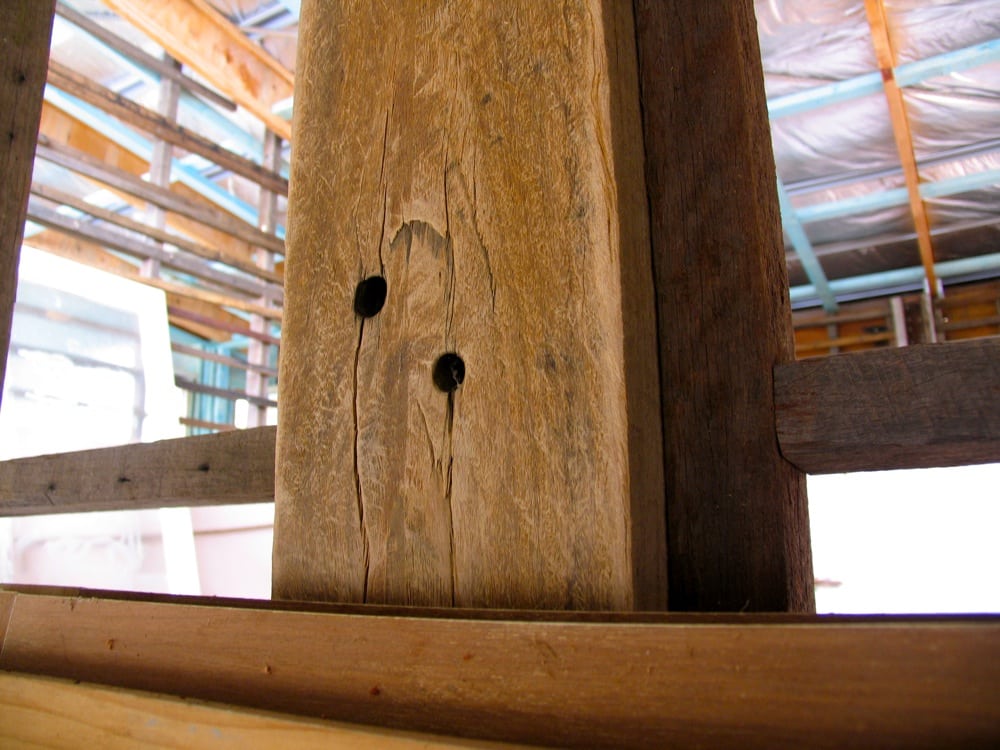
Beautiful, hard-won recycled bridge beams that hold up our roof, with some tell-tale blue timbers framing the ceiling above...
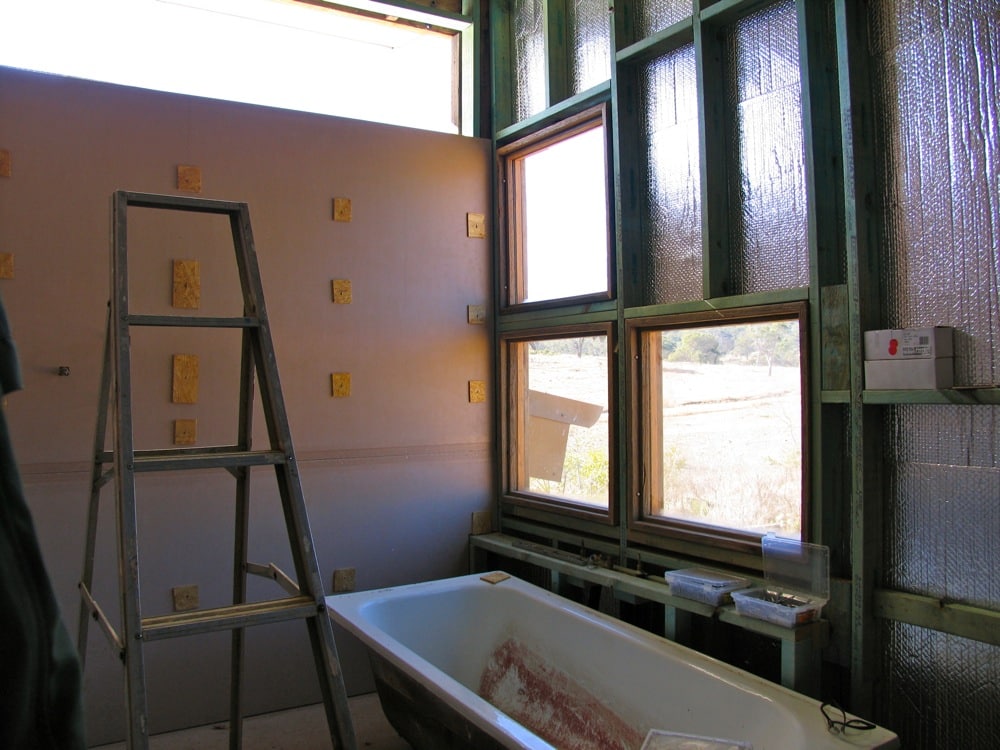
More sinful blue, this time in the bathroom. Hey, check out the recycled bath! Can't wait to soak up the view in this...
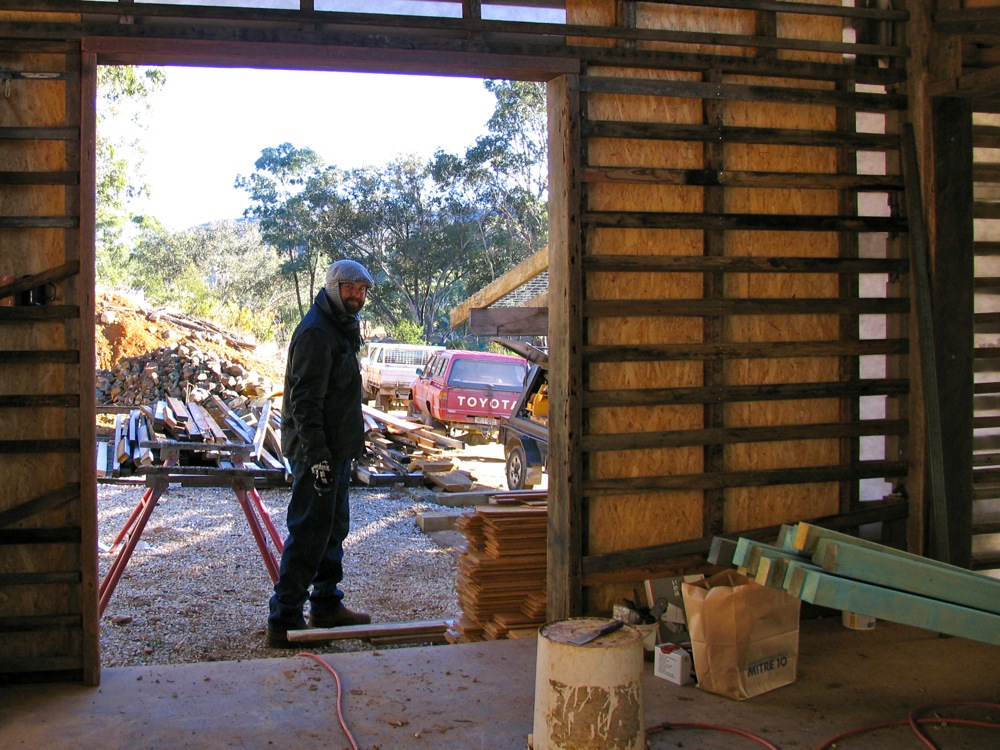
Yep, you can spot it a mile off once you know what you're looking for.

Now that i have made my confession, can I say that the other 95% of the timber being used in our house is either all good or best-practice.

Meaning I can, in theory, still let my toddler gnaw happily on samples of nearly all of our building materials. That must count for something, surely…
Related posts:

20 Comments

  1. Renee
    Posted August 20, 2011 at 6:27 am | Permalink | Reply

    No one can really understand the unbelievable pressures of trying to build a non-toxic house until they do it. And have to make decision after decision while still trying to get the job done! It took us four and a half years and there are still some things I can’t believe we decided to do or not do. But there you are.

  2. Alex.
    Posted August 20, 2011 at 7:23 am | Permalink | Reply

    I wouldn’t be feeling too bad about the blue… You’ve done, and are doing, extremely well with the “tinyhouse”. Best of luck with the deadlines tho’…

    Cheers,

    Alex (who has a not quite completed owner builder job of his own)

  3. Posted August 20, 2011 at 7:53 am | Permalink | Reply

    Yep. It’s hard to be a purist. What’s important is doing as much as one can towards that goal. I love reading your blog. Thank you for sharing.

    One thing to note, I was surprised regarding your comment of straw being flammable and prone to critters. Were you planning on using straw bales? Because, as I understand it, dry straw bales do not contain the oxygen necessary to combust – they will only char on the outsides. And, critters will not be a problem if you put a thick enough layer of plaster on the outside.

    Anyways…thanks again for sharing your wonderful posts and the inspiration therein.

    • Posted August 20, 2011 at 12:14 pm | Permalink | Reply

      Hi Rachel, yes you’re right strawbales are not considered flammable. What we were planning on using was loose straw, stuffed between our outer and inner layers of wattles (ie horizontal strips) and then compressed somehow, and this is what we decided would be too flammable…

  4. Steve
    Posted August 20, 2011 at 8:49 am | Permalink | Reply

    Recycled timber can be a relatively environmentally benign material to use, especially if sourced locally. It is not all roses though, please be aware that a lot of older (salvaged/recycled) timber was treated arsenic, herbicides, organophosphate insecticides, creosote etc. that all persist almost indefinitely and is nasty nasty stuff. The use of many of these products was banned due to OH & S but their legacy lives on stored in the recycled timber and is easily and quickly ‘activated’ when you start cutting/sanding these grand old timbers. Many railway timbers (especially sleepers) was arsnic treat to start with then sprayed with herbicides every year for 50 years, had oil, raw sewage and mercury (from train heaters) leaked on it for 50 years, the stuff is a toxic sponge and it is still sold to the general public to put around their veggie gardens etc.!! Ouch… I am not saying avoid recycled timber (my own house is built entirely from it) but be aware it is often far worse for your health and needs to be used with caution and in safety. It often has a little more history than you imagine.

    • Posted August 20, 2011 at 12:18 pm | Permalink | Reply

      Hi Steve, yes you’re spot on there. We wouldn’t be using recycled sleepers for anything on Milkwood, for that reason. We had many people give us advice that if we sourced recycled hardwood it was much less likely to be treated, so that’s what we’ve done… and taken precautions also, just in case. Our bridge timbers are turpentine wood from a 100 year old bridge way out west, and given those parameters it wouldn’t have been treated, apparently… but it’s all a minefield, that’s for sure!

  5. Posted August 20, 2011 at 9:33 am | Permalink | Reply

    Well done guys on getting that far resorting to such a small amount of treated pine, and on doing the research to know what you are using. Even better for having the guts to blog about it, like Steve said, it ‘aint all green tea ‘and roses’.

    I too have come to the same realization as Steve in that a lot of our chook tractors and pig shelters have been made from scraps of timber recycled from old pallets and from the tip shop, but when I start to work with it I become incredibly concerned about the feel of the timber, the colour of the sawdust etc. Most of it is fine and still feels like timber, but occasionally a piece slips through my original inspection and my paranoia comes to the fore.

    Occasionally I too have resorted to some treated pine in situations when a particular size of timber is essential and I must say the time and energy saved in cutting and drilling etc. always amazes me.

    Keep up the good work, and happy gnawing young Ashar.

  6. Posted August 20, 2011 at 9:42 am | Permalink | Reply

    Like you we used the blue in renovating our own tiny house / cottage … so I can appreciate how you are feeling. If our local saw mill had still been operating we’d have used White Cypress Pine (Callitris glaucophylla) as this is what most of the place is made from … and its still here after 70 years. I’m interested to know whether this was an option you looked at and if it has nasties in it? Certainly the white ants give it a big miss.
    Conrats on doing all the research. You will have amassed a whole bunch of knowledge that won’t go astray in any case.

  7. Posted August 20, 2011 at 5:16 pm | Permalink | Reply

    Looks beautiful K&N. One option for insulation on future building projects is wool ‘core samples’. Wool traders stockpile these samples which are all natural wool that is collected during the grading process. It’s cannot be sold through usual channels because the needle which penetrates the wool bag (to collect and grade quality) also picks up small quantities of the synthetic bag the wool transported in. So it’s cheap and all natural. Might be a good option for your next building adventure (if you ever get over the first!!).
    Ben Falloon

  8. Posted August 20, 2011 at 5:56 pm | Permalink | Reply

    I am totally in awe of you guys for pursuing your dreams despite the huge effort. I love getting updates and I can’t wait to see it when you’re all settled in!

  9. Posted August 20, 2011 at 9:55 pm | Permalink | Reply

    Can’t wait to see Tiny House and you all in it ! Last time I saw it we were just erecting the beginning of the frame..
    I love your honesty – and your dedication to the principles – we live in an imperfect wold where such dedication is an inspiration.
    See you in 10 days time !
    x

  10. Posted August 21, 2011 at 9:42 pm | Permalink | Reply

    Looks like you are doing an amazing job and you just can’t completely avoid some nasties. My thoughts are it’s better to have blue wood than pulling apart your dream home after the termites have attacked it!

  11. Posted August 21, 2011 at 9:51 pm | Permalink | Reply

    sorry, didn’t read your post properly the first time…I am sure you have taken some precautions for termites with all that beautiful timber…and the use of the treated timber is small in comparison to the amount of ‘natural’ timbers you have used. Again it is hard to completely avoid some nasties!

  12. Rachel
    Posted September 8, 2011 at 10:31 pm | Permalink | Reply

    I hope you enjoy your wondefully rewarding project. Hats off to you for your hard work and commitment :) I find myself it’s a challenge to get alot of this sort of information. Just tonight I’ve been trying to research the potential toxicity of reclaimed floor joists before I repurpose them as planter boxes or garden furniture, and Steve’s post is probably about the most informative thing I’ve come across so far. I have to say Ienvy your wonderful find of the bridge timbers, how lovely to have a story to each element you use.

    • Posted September 12, 2011 at 11:39 am | Permalink | Reply

      thanks rachel – who is steve, and where is his post?

      • Rachel
        Posted September 13, 2011 at 1:26 pm | Permalink

        Hi Kirsten
        Steve’s is the fourth post in this thread :)

      • Posted September 13, 2011 at 2:03 pm | Permalink

        aha. got it now :)

Leave a Reply

Fill in your details below or click an icon to log in:

WordPress.com Logo

You are commenting using your WordPress.com account. Log Out / Change )

Twitter picture

You are commenting using your Twitter account. Log Out / Change )

Facebook photo

You are commenting using your Facebook account. Log Out / Change )

Connecting to %s

Follow

Get every new post delivered to your Inbox.

Join 7,062 other followers