

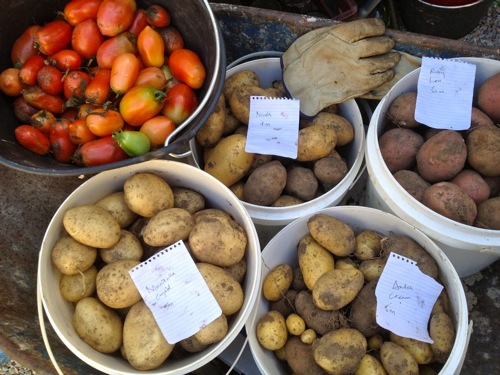
Here come the potatoes! This is the first year we’ve grown them en-mass, and we are now (finally) starting to harvest. Duch creams, Ruby Lous, Nicloas…. mmm fresh organic potatoes roasted in our own olive oil and rosemary – om nom nom…
This story starts with an encounter with a potato nerd (self proclaimed). His name is Wade, and he showed up at our last Biofertilizer course. With sacks and sacks and sacks of seed potatoes. Yay!
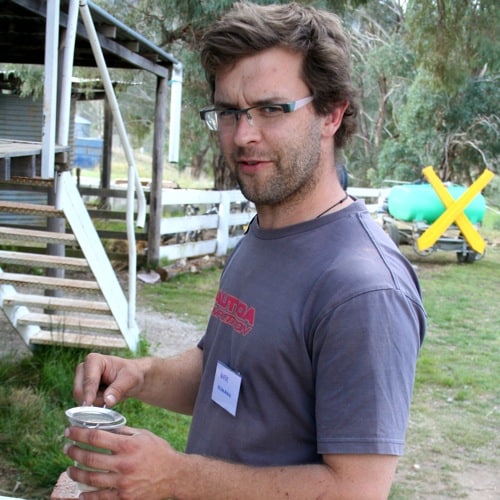
Wade Neumann. Farmer, Gundaroo Tiller maker, and Potato Nerd
Wade likes potatoes very much. He grows his at Mundulla in South Australia, and he is something of an enthusiast on the best way to grow them organically on a commercial scale. We were happy to listen.
There is nothing I like better than an in-depth conversation with someone on their favorite topic (as long as it’s not themselves, that is). And so, we listened, and then we planted. A lot.
I personally am from the no-dig raised bed school of potato planting. I’ve had great success putting down seed potatoes on cardboard, covering them with heaps of mulch, waiting till the green tips come through and then watering, feeding and continuing to mulch until they are ready.
But apparently that’s not the way you do it if you want serious yields of potatoes. So here’s what we did to grow potatoes on a community scale:
– First of all we broke up the ground, and then broke up all the large clods. By the end of it, you could say the area was semi-tilled.
– We chose to leave the potatoes whole (rather than cutting each one in half and washing it to remove the starch from the cut side, which apparently helps with preventing fungal growth). We did this on Wade’s advice that it might be best since this was the first year of cultivation for this patch, and the soil was not briliant. By planting them whole, each potato plant has more energy store to work off, and doesn’t have to depend on the soil so much.
– Then we set up string lines and planted the potatoes, hilling the earth up around them them as we went. This bit took quite a while.
– Then we set up dripline down each row (scavenged from a vineyard) so that we could water the area if needed
– Next we waited until the potatoes sprouted, and when they were 30cm high, we hilled them again, bringing the soil up around the plants
– Finally after the second hilling, we mulched the entire area.
We were advised to mulch only after the second hilling as mulching after planting means in order to hill the second time you have to first peel all the mulch off, which is highly laborious.We followed these instructions, though it was hard to watch that bare soil for the 3 weeks or so it took between planting and the second hilling!
So yes. Then we watered as needed, applied liberal amounts of biofertilizer during a dry spell, and crossed our fingers.
And now, in mid Feburary, we are harvesting good sized potatoes. It’s been an unprecedentedly wet and cold summer here, so I think it’s a pretty good outcome. The potatoes are of course delicious, especially after Rose has worked her magic!
I will report back with full numbers of yields as they come in. We’re harvesting them as we need them at this point, and will pull up the remainder of the crop in due course.
We feed a lot of people here these days, between our crew, our fabulous wwoofers and of course all our course students, so it will be interesting to see how far this crop goes!
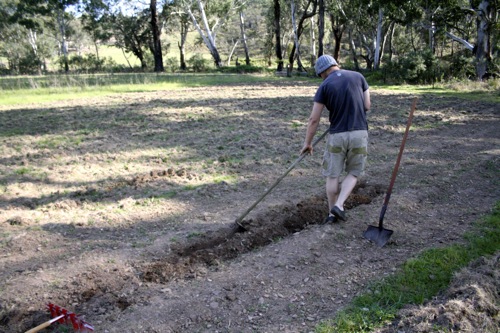
Wade shows how to create a potato row
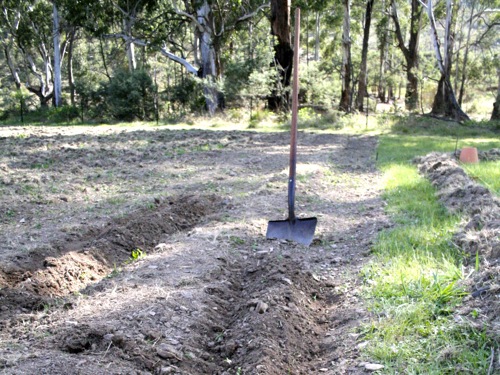
This is going to take a while...
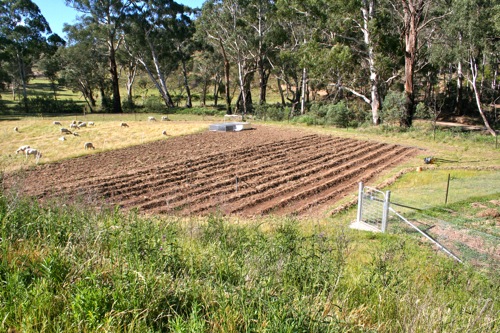
Potatoes planted and hilled. 10th Nov 2011
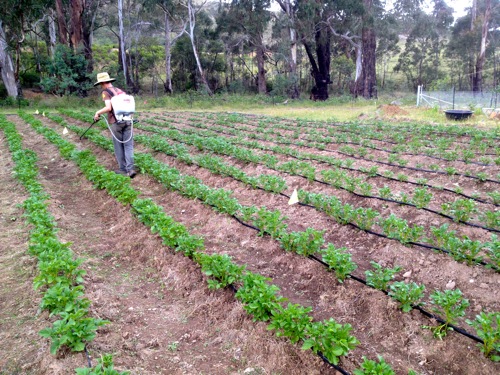
Michael applying biofertilizer to the potatoes, before their second hilling. 10th Dec 2011
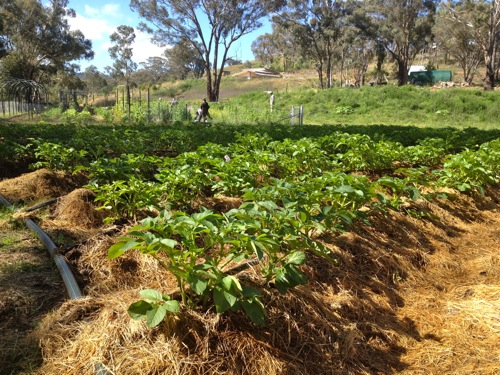
Potatoes all mulched and happy with market garden beyond. 24th Dec 2011
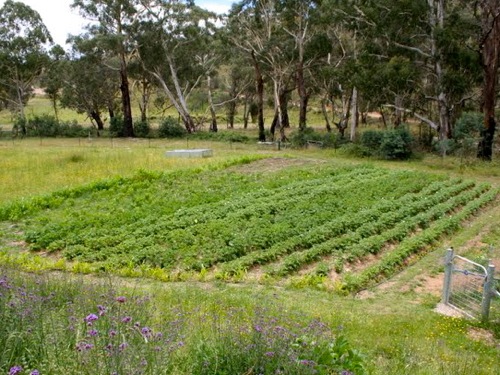
Potatoes coming along. 13th Jan 2012
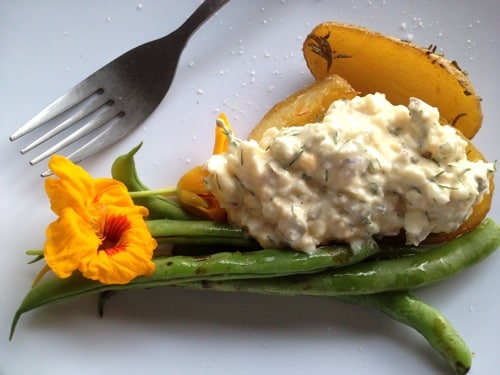
First meal with new potatoes! And milkwood beans and eggs. 27th Jan 2012
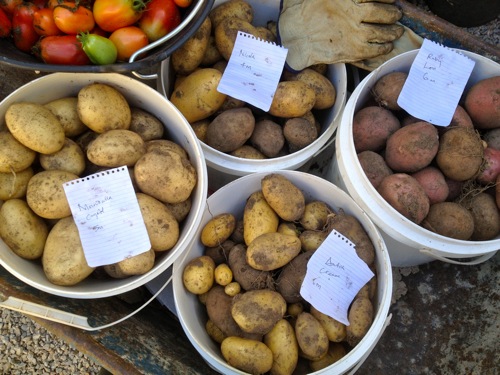
First harvest from the poorly-favored end of the potato patch (under the big eucalypt trees). Yay potatoes! 13 Feb 2012
Big thanks to Stephen Couling for driving this project, to Wade Neumann for his enthusiasm and seed potatoes, to Mike and Joyce from Allsun for their ongoing mentorship, and to all the Milkwood Farm interns and wwoofers who’ve lent a hand between planting and harvest. Yay for starch, and yay for all of you.
Related posts:
- Growing Annual Vegetables CD Rom: review
- Milkwood Market Garden: the first 5 months
- Eliot Coleman’s ‘Fertile Dozen’: Recommended reading for organic growers




Hi all, aside of the super grumpy photos, I’m real proud to see a bunch of great looking spuds! well done! wish there were more of Rose in the world – it looks fantastic!
Knew you’d do it proud Stephen!, and how did they respond to the biofert? I’d love to hear your observations.
kind regards,
thanks again, Wade!
2nd hilling was worth the effort the Stephen! Makes me happy to know the blisters were not in vain. Good on yer. i’ll make sure Erin sees this.
How are you storing them?
mostly by leaving them in the ground at this stage… but we’ll have to deal with it soon… still open to suggestions on that one
big up’s to all the interns that put in hours of energy planting and hilling….